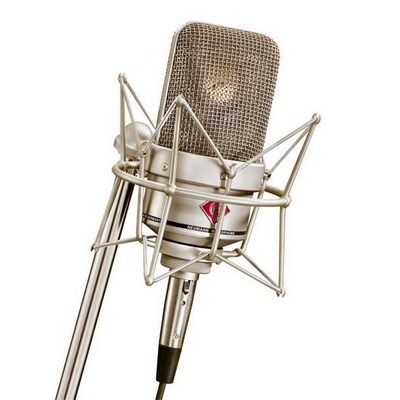
Neumann Tlm 193 | Condenser Microphone
TLM 193 - Studio Microphone
TLM 193 - Studio Microphone
TLM 193 - Studio Microphone
TLM 193 - Studio Microphone
in 13 offers
The lowest price for Neumann Tlm 193 | Condenser Microphone right now is $2,106.31 at gigstore.ae, compared across 13 retailers.
The all-time low was $1,937.98 on 27 Feb 2026 — today's price is 9% above the lowest ever. That's a little above the best price we've seen.
Prices last updated 9 Sept 2026.
Last updated at 09/09/2026 17:23:40
Neumann TLM-193 Cardioid Condenser Microphone
Affiliate Disclosure: We may receive a small commission for purchases made through this link at no extra cost to you. This helps support our site. Thank you!
Neumann TLM 193 Large Diaphragm Cardioid Condenser Microphone - Black
Delivery $131.93
Neumann TLM 193 | Condenser Microphone
Delivery $276.86
Neumann TLM 193 Microphone
Free delivery
Neumann TLM 193 Reference Class Condenser Microphone
Free delivery
Neumann TLM 193 Large-Diaphragm Cardioid Studio Condenser Microphone
7-day returns
Neumann TLM193 Studio Condenser Microphone
Delivery $12
Neumann TLM193 Large Diaphragm Cardioid Condenser Microphone With Low Self Noise And High SPL Capability
Delivery $5
Neumann TLM193 Large Diaphragm Condenser Microphone (Black)
Delivery $5
Neumann TLM 193 Cardioid Large Diaphragm Condenser Microphone
Delivery between 10–24 Sept $60.98
originally posted on ebay.com
First used through a Bellari Mic Pre on my brothers folksy voice and Martin guitar and produced some of the most beautiful recordings he ever made,Next we did a shootout through an Avalon M5 and through a Avalon 747 for the tube and compression. . It through the sound into a whole nother atmosphere. Because of the smooth and relatively flat response of the mic, coupled with the 747 after being sent through the M5,the mic was able to perform with a multiciplicity of colors and sheens which could be made highly suitable for almost any home or professional application on male or female voice, violin, cello acoustic guitar or even drum overheads with a little Q. What makes them so special is their rather warm transparent character. I love them for male vocals.
originally posted on perfectcircuit.com
I've used this mic for 15 years. It sounds amazing on every recording and instrument I've made it with. When they say "Reference Grade", it really is. Uncolored as it is, whatever you record is what you hear back, thus it's transparency. It has a warm rather than the cool or brittle sound of some other popular mics. Can't go wrong with this microphone.
originally posted on ebay.com
Great way to step into the world of Neumann sound. They have a number of lower priced (for them anyway) choices and this is IMO the most versatile of those choices. It is a very flat mic that works wonders on sibilant and/or thin vocals and works well for a number of instruments. Probably the single most valuable feature of this mic is how well it takes EQ. If you want a brighter vocal or instrument simply EQ to taste and this mic gives very pleasing results. But EQing a bright mic can often leave you unsatisfied no matter what you do to it. The TLM193 is a perfect choice for limited budgets where big refined sound and convincing flexibility in "character" via EQ is desired.
| Acoustical Operating Principal | Pressure Gradient Transducer |
| Directional Pattern | Cardioid |
| Frequency Range | 20Hz - 20kHz |
| Rated Impedance | 50Ω |
| Rated Load Impedance | 1kΩ |

Neumann TLM-193 Cardioid Condenser Microphone
Affiliate Disclosure: We may receive a small commission for purchases made through this link at no extra cost to you. This helps support our site. Thank you!
Neumann TLM 193 Large Diaphragm Cardioid Condenser Microphone - Black
Delivery $131.93
Neumann TLM 193 | Condenser Microphone
Delivery $276.86
Neumann TLM 193 Microphone
Free delivery
Neumann TLM 193 Reference Class Condenser Microphone
Free delivery
First used through a Bellari Mic Pre on my brothers folksy voice and Martin guitar and produced some of the most beautiful recordings he ever made,Next we did a shootout through an Avalon M5 and through a Avalon 747 for the tube and compression. . It through the sound into a whole nother atmosphere. Because of the smooth and relatively flat response of the mic, coupled with the 747 after being sent through the M5,the mic was able to perform with a multiciplicity of colors and sheens which could be made highly suitable for almost any home or professional application on male or female voice, violin, cello acoustic guitar or even drum overheads with a little Q. What makes them so special is their rather warm transparent character. I love them for male vocals.
I've used this mic for 15 years. It sounds amazing on every recording and instrument I've made it with. When they say "Reference Grade", it really is. Uncolored as it is, whatever you record is what you hear back, thus it's transparency. It has a warm rather than the cool or brittle sound of some other popular mics. Can't go wrong with this microphone.
Great way to step into the world of Neumann sound. They have a number of lower priced (for them anyway) choices and this is IMO the most versatile of those choices. It is a very flat mic that works wonders on sibilant and/or thin vocals and works well for a number of instruments. Probably the single most valuable feature of this mic is how well it takes EQ. If you want a brighter vocal or instrument simply EQ to taste and this mic gives very pleasing results. But EQing a bright mic can often leave you unsatisfied no matter what you do to it. The TLM193 is a perfect choice for limited budgets where big refined sound and convincing flexibility in "character" via EQ is desired.
After long microphone-reviews study and some unsucsessfull mic choices I decided to buy a Neumann mic,although -still don't know why- I didn't want to buy Neumann.I wanted to try something not so "common"... So endly I ordered the Neumann tlm 193.. It arrived in a small wooden box.I didn't like the original shockmount so I ordered the Rycote USM Universal Studio Mount and a Monster studio cable. I was testing the mic trough the focusrite twintrak pro and through pirismsound audio as well as without anything. Although I am using the mic for vocals it was tried also for piano,but to be honest,the result was not satisfying enough moreless because of the limited characteristic.And endly for female vocals - I just can't get enough of this mic. Yes,it is very ... MoreAfter long microphone-reviews study and some unsucsessfull mic choices I decided to buy a Neumann mic,although -still don't know why- I didn't want to buy Neumann.I wanted to try something not so "common"... So endly I ordered the Neumann tlm 193.. It arrived in a small wooden box.I didn't like the original shockmount so I ordered the Rycote USM Universal Studio Mount and a Monster studio cable. I was testing the mic trough the focusrite twintrak pro and through pirismsound audio as well as without anything. Although I am using the mic for vocals it was tried also for piano,but to be honest,the result was not satisfying enough moreless because of the limited characteristic.And endly for female vocals - I just can't get enough of this mic. Yes,it is very realistic,without any coloration.in low parts it is very detailed highs are simply like they should be.Deals smoothly with any change in the dynamics.It was exactly what I was looking for for the vocals!
I'm writing this to inform that if you're expecting this mike to sound like an 87 or a vintage 69 on vocals, it doesn't. What this mike is best for is recording instruments. I had trouble for years with mikes not accurately reproducing what was being picked up. After getting a perfect sound on a guitar setup, I would be disappointed when the recording wasn't exactly like what I heard live. This mike is perfect for that. It also sounds great with some vocalists, but it doesn't have that rich sound on vocals that those other mikes have. I wouldn't use those other mikes on my guitar. This was worth every penny.
This mic is distinguished by the fact that there is no high frequency boost. I like that. If, however, you choose to EQ it, it takes it well. Neumann made changes to the sensitivity of this microphone after serial number 5825 Below #5825 the voltage output is 11 mV/pa. Above #5825 the voltage output is 18 mV/pa. That is a 4.3dB increase. This is an important fact to consider when trying to match mic pairs. It is a neutral sounding and musical mic! It is a rare find in the world of mics.
The Neumann TLM 193 microphone is a large diaphragm side address condenser microphone from one of the world's premier leaders in microphone technology and quality. This mic reminds one of a Neumann U 87 that has been shrunk in the dryer In actuality, it is no replacement for its big brother the U 87 but the things it does, boy it does them well. The name TLM is abbreviated for "transformer less microphone" so you know you are not getting the warmth and the extended airy top end of the U 87. But this mic does have a fat bottom, flat accurate and detailed midrange and a nice top end. Used as overheads on a drum kit, over an acoustic piano, in front of acoustic bass, viola, violin, cello, acoustic guitar, and even up close on a hi hat, snare or floor Tom this thing ... MoreThe Neumann TLM 193 microphone is a large diaphragm side address condenser microphone from one of the world's premier leaders in microphone technology and quality. This mic reminds one of a Neumann U 87 that has been shrunk in the dryer In actuality, it is no replacement for its big brother the U 87 but the things it does, boy it does them well. The name TLM is abbreviated for "transformer less microphone" so you know you are not getting the warmth and the extended airy top end of the U 87. But this mic does have a fat bottom, flat accurate and detailed midrange and a nice top end. Used as overheads on a drum kit, over an acoustic piano, in front of acoustic bass, viola, violin, cello, acoustic guitar, and even up close on a hi hat, snare or floor Tom this thing smokes anything else you can think of using. For the money, there is no equal. Jim Mullen Dynacoustics Pro Audio
I'm not gonna try to impress anyone with techno- head testimony or micro chip mumbo jumbo in describing this mic. It's more or less an entry level Neumann that would probably be purchased by someone who doesn't have a huge budget or a degree in physics, but wants that classic Neumann sound. So, I'll give it to ya in layman terminology - straight up. I've owned one of these mics for about ten years now, and have used it on just about every instrument under the sun (vocals too, of course) with great results. NO - you're not going to get a U87 sound from it, NO - you're not going to get a shock mount or pop filter with it (though you'll definitely need 'em), YES - you're gonna have to fiddle with EQ and preamplification to get an acceptable signal out of it. You're ... MoreI'm not gonna try to impress anyone with techno- head testimony or micro chip mumbo jumbo in describing this mic. It's more or less an entry level Neumann that would probably be purchased by someone who doesn't have a huge budget or a degree in physics, but wants that classic Neumann sound. So, I'll give it to ya in layman terminology - straight up. I've owned one of these mics for about ten years now, and have used it on just about every instrument under the sun (vocals too, of course) with great results. NO - you're not going to get a U87 sound from it, NO - you're not going to get a shock mount or pop filter with it (though you'll definitely need 'em), YES - you're gonna have to fiddle with EQ and preamplification to get an acceptable signal out of it. You're also gonna need phantom power to fire it up. The mic is extremely sensitive, like all Neumanns, and will pick up background noise with ease, so having a quiet, closed off area to record in is imperative. There are no pads or switches on the mic itself, so all of your adjustments will have to come from your preamps, EQs and recording consoles. I mention this because I can't recall ever setting the mic up and getting a great sound out of it without having to push buttons and twist knobs. Not to worry though, the TLM-193 is capable of some awesome copy once you've got it tweaked properly. It's a bit lacking in airiness, but that's easily remedied with the right equalization. I've actually heard it described as "dull sounding" - to me, dull is better than over-colored or frequency heavy - you could always touch it up to your taste with your signal processors. It's always better to have to add flavor rather than having to take it away as far as I'm concerned. There are many mics out there for less than half the price of the TLM-193 that could possibly hold a candle to it's performance, and some will say that these "lesser" microphones can actually out perform it. To me, it's all a matter of personal taste, and after all - it IS a Neumann. To each his own! Roland Pepin
I've owned this mic for several years now. If you can only own one nice microphone, I'd recommend this one. It has that smooth-buttery Neumann sound. It is a darker mic than most of the line. It will breathe well through a nice preamp, I especially like it through the ADL600. I usually have to brighten up the mic during mixing, but it's not too bad. This mic EQ's well and sounds great. Very rich tone, great on vocalists that are bright. I've also used this mic on acoustic guitars, bass cabs, and electric cabs all to great results. Sweet mic at the price point, and a little easier to manage in a mix than the TLM103.
I bought this to experience that "magical" Neumann sound in my home studio. First thing I noticed was that it was darker than my Blue Spark or Rode NT-1A. That can be a good thing -- especially on female voices. I was working with a female singer who sounded great in terms of pitch and inflection, but she could get a little shrill and her higher notes were downright brittle. Between sessions, I bought the Neumann and it really threw a silk blanket on her vocals. On my own (male, tenor) voice, however, it was making me sound a little TOO dark for my liking, but it was easy enough to use plug-ins to bring me back out of the mix. But eventually, as the female singer moved away and I found myself recording my own voice exclusively, I could no longer justify owning a ... MoreI bought this to experience that "magical" Neumann sound in my home studio. First thing I noticed was that it was darker than my Blue Spark or Rode NT-1A. That can be a good thing -- especially on female voices. I was working with a female singer who sounded great in terms of pitch and inflection, but she could get a little shrill and her higher notes were downright brittle. Between sessions, I bought the Neumann and it really threw a silk blanket on her vocals. On my own (male, tenor) voice, however, it was making me sound a little TOO dark for my liking, but it was easy enough to use plug-ins to bring me back out of the mix. But eventually, as the female singer moved away and I found myself recording my own voice exclusively, I could no longer justify owning a $1700 mic that was causing me more work in post than my $300 Blue. So consider whether or not you want the usual "vocal mic" high end boost, because the TLM-193 does NOT have it. As far as clarity, this mic is every bit as good (but not noticeably better than) my Rode and Blue, either of which cost less than the Neumann's shock mount alone. Also, be advised, your mic is just one part of your front end signal chain. If you have an average or below average pre-amp, or an untreated room that doesn't sound great, the Neumann is at best going to sound like any other mic, and at worst may expose the flaws of your setup even more (especially the untreated room -- it is not good at off-axis rejection). Ultimately, it comes down to the prestige of the badge anymore, in my humble opinion. If you have a pro studio and clients to impress, they really do need to see that Neumann badge somewhere in your mic locker to take you seriously. If you are only recording yourself or friends, you can go for a MUCH less expensive mic and get results almost indistinguishable from the TLM-193.
| Acoustical Operating Principal | Pressure Gradient Transducer |
| Directional Pattern | Cardioid |
| Frequency Range | 20Hz - 20kHz |
| Rated Impedance | 50Ω |
| Rated Load Impedance | 1kΩ |