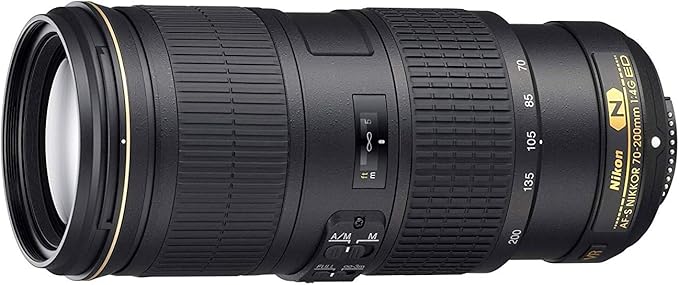
Nikon AF-S Nikkor 200-400mm f/4G Ed VR II Lens
The Nikon 200-400mm f4 G VR II AF-S ED Lens replaces the highly acclaimed AF-S Zoom 200-400mm f/4G IF-ED VR and features the new generation of Vibration Reduction technology (VR II), providing the ability to shoot at shutter speeds up to four stops slower so sharper images can be achieved. The 200-400mm f/4G ED VR II now incorporates Nikon’s exclusive anti-reflection Nano Crystal coat to drastically reduce ghosting and flare, along with four ED glass elements to minimise internal reflections and aberrations and deliver rich, high contrast images even under testing lighting conditions. The new lens features an autofocus with a built-in silent wave motor to ensure fast and quiet focusing, while a new A/M mode added to existing M/A and M modes enables autofocus priority even if the focus ring is being handled during shooting. The Nikon 200-400mm f4 G VR II AF-S ED Lens has a tough magnesium body with weather sealing to withstand the effects of dust and moisture in the toughest of shooting conditions. Key Features A super telephoto zoom lens supporting Nikon's exclusive range of focal lengths from 200 to 400mm Coverage for a wide range of focal lengths enables capture of a wide variety of angles of view with a single lens. Nano Crystal Coat significantly reduces ghost and flare Built-in vibration reduction (VR II) Offers camera shake compensation equivalent to a shutter speed increase of approximately four stops ED lens elements (4) adopted for superior chromatic aberration compensation A/M (autofocus with manual override, AF priority) mode added The addition of A/M (autofocus with manual override, AF priority) mode prevents accidental switching from autofocus to manual focus. Along with M/A (autofocus with manual override, MF priority) mode, which enables manual focusing by rotating the focus ring while autofocus is operating, and M (manual focus) mode, this makes for a total of three focus modes.
The Nikon 200-400mm f4 G VR II AF-S ED Lens replaces the highly acclaimed AF-S Zoom 200-400mm f/4G IF-ED VR and features the new generation of Vibration Reduction technology (VR II), providing the ability to shoot at shutter speeds up to four stops slower so sharper images can be achieved. The 200-400mm f/4G ED VR II now incorporates Nikon’s exclusive anti-reflection Nano Crystal coat to drastically reduce ghosting and flare, along with four ED glass elements to minimise internal reflections and aberrations and deliver rich, high contrast images even under testing lighting conditions. The new lens features an autofocus with a built-in silent wave motor to ensure fast and quiet focusing, while a new A/M mode added to existing M/A and M modes enables autofocus priority even if the focus ring is being handled during shooting. The Nikon 200-400mm f4 G VR II AF-S ED Lens has a tough magnesium body with weather sealing to withstand the effects of dust and moisture in the toughest of shooting conditions. Key Features A super telephoto zoom lens supporting Nikon's exclusive range of focal lengths from 200 to 400mm Coverage for a wide range of focal lengths enables capture of a wide variety of angles of view with a single lens. Nano Crystal Coat significantly reduces ghost and flare Built-in vibration reduction (VR II) Offers camera shake compensation equivalent to a shutter speed increase of approximately four stops ED lens elements (4) adopted for superior chromatic aberration compensation A/M (autofocus with manual override, AF priority) mode added The addition of A/M (autofocus with manual override, AF priority) mode prevents accidental switching from autofocus to manual focus. Along with M/A (autofocus with manual override, MF priority) mode, which enables manual focusing by rotating the focus ring while autofocus is operating, and M (manual focus) mode, this makes for a total of three focus modes.
The Nikon 200-400mm f4 G VR II AF-S ED Lens replaces the highly acclaimed AF-S Zoom 200-400mm f/4G IF-ED VR and features the new generation of Vibration Reduction technology (VR II), providing the ability to shoot at shutter speeds up to four stops slower so sharper images can be achieved. The 200-400mm f/4G ED VR II now incorporates Nikon’s exclusive anti-reflection Nano Crystal coat to drastically reduce ghosting and flare, along with four ED glass elements to minimise internal reflections and aberrations and deliver rich, high contrast images even under testing lighting conditions. The new lens features an autofocus with a built-in silent wave motor to ensure fast and quiet focusing, while a new A/M mode added to existing M/A and M modes enables autofocus priority even if the focus ring is being handled during shooting. The Nikon 200-400mm f4 G VR II AF-S ED Lens has a tough magnesium body with weather sealing to withstand the effects of dust and moisture in the toughest of shooting conditions. Key Features A super telephoto zoom lens supporting Nikon's exclusive range of focal lengths from 200 to 400mm Coverage for a wide range of focal lengths enables capture of a wide variety of angles of view with a single lens. Nano Crystal Coat significantly reduces ghost and flare Built-in vibration reduction (VR II) Offers camera shake compensation equivalent to a shutter speed increase of approximately four stops ED lens elements (4) adopted for superior chromatic aberration compensation A/M (autofocus with manual override, AF priority) mode added The addition of A/M (autofocus with manual override, AF priority) mode prevents accidental switching from autofocus to manual focus. Along with M/A (autofocus with manual override, MF priority) mode, which enables manual focusing by rotating the focus ring while autofocus is operating, and M (manual focus) mode, this makes for a total of three focus modes.
The Nikon 200-400mm f4 G VR II AF-S ED Lens replaces the highly acclaimed AF-S Zoom 200-400mm f/4G IF-ED VR and features the new generation of Vibration Reduction technology (VR II), providing the ability to shoot at shutter speeds up to four stops slower so sharper images can be achieved. The 200-400mm f/4G ED VR II now incorporates Nikon’s exclusive anti-reflection Nano Crystal coat to drastically reduce ghosting and flare, along with four ED glass elements to minimise internal reflections and aberrations and deliver rich, high contrast images even under testing lighting conditions. The new lens features an autofocus with a built-in silent wave motor to ensure fast and quiet focusing, while a new A/M mode added to existing M/A and M modes enables autofocus priority even if the focus ring is being handled during shooting. The Nikon 200-400mm f4 G VR II AF-S ED Lens has a tough magnesium body with weather sealing to withstand the effects of dust and moisture in the toughest of shooting conditions. Key Features A super telephoto zoom lens supporting Nikon's exclusive range of focal lengths from 200 to 400mm Coverage for a wide range of focal lengths enables capture of a wide variety of angles of view with a single lens. Nano Crystal Coat significantly reduces ghost and flare Built-in vibration reduction (VR II) Offers camera shake compensation equivalent to a shutter speed increase of approximately four stops ED lens elements (4) adopted for superior chromatic aberration compensation A/M (autofocus with manual override, AF priority) mode added The addition of A/M (autofocus with manual override, AF priority) mode prevents accidental switching from autofocus to manual focus. Along with M/A (autofocus with manual override, MF priority) mode, which enables manual focusing by rotating the focus ring while autofocus is operating, and M (manual focus) mode, this makes for a total of three focus modes.
in 11 offers
The lowest price for Nikon AF-S Nikkor 200-400mm f/4G Ed VR II Lens right now is $1,395.96 at Unique Photo, compared across 7 retailers.
The all-time low was $719.17 on 15 May 2026 — today's price is 94% above the lowest ever. It has been notably cheaper before — worth setting a price alert.
Prices last updated 24 Aug 2026.
Last updated at 24/08/2026 13:10:55
Used Nikon 200-400mm f/4 VR - Good
Delivery $41.88
[top Mint] Nikon Nikkor Af-s 200-400mm F4 Ed Vr Telephoto Lens From
Free delivery
Affiliate Disclosure: We may receive a small commission for purchases made through this link at no extra cost to you. This helps support our site. Thank you!
Nikon Af-s Nikkor 200-400mm F/4 Vr (good Af) Super Tele Lens F Mount
Free delivery
Affiliate Disclosure: We may receive a small commission for purchases made through this link at no extra cost to you. This helps support our site. Thank you!
Nikon Af-s Nikkor 200-400mm F/4 F4 Ii Ed Vr Lens, For D750 D810 D850
Free delivery
Affiliate Disclosure: We may receive a small commission for purchases made through this link at no extra cost to you. This helps support our site. Thank you!
Nikon Af-s Nikkor 200-400mm F/4g Vr If-ed Swm Super Telephoto Zoom
Free delivery
Affiliate Disclosure: We may receive a small commission for purchases made through this link at no extra cost to you. This helps support our site. Thank you!
[USED] Nikon AF-S NIKKOR 200-400mm f/4G ED VR II Lens (S/N: 206161) (Near New in Lens Case!)
Not eligible for returns
Nikon 200-400mm f/4G AF-S ED-IF VR II (Vibration Reduction) Zoom Telephoto AF Zoom Nikkor Autofocus Len (Nikon Malaysia)
Nikon AF-S NIKKOR 200-400mm f/4G VR IF-ED SWM Super Telephoto Zoom Lens
Free delivery
Nikon AF-S NIKKOR 200-400mm f/4G VR IF-ED SWM Super Telephoto Zoom Lens
Free delivery
Nikon AF-S NIKKOR 200-400mm f/4G VR IF-ED SWM Super Telephoto Zoom Lens
Free delivery between 27 Aug – 4 Sept
originally posted on ebay.com
The Nikon AF-S VR G 200-400 mm f/4.0 zoom is a pro lens by any means. You may also call it a "tool", so you should buy it if you have a job in mind for it. I bought mine for airplane and airshow photography. I have a Nikon 300 mm f/2.8 prime lens that I use a lot and it is excellent for me under most circumstances, but there are times when a fixed focal length lens is less than optimal. At most airshows the photographer's move relative to the airplanes is limited. Often times the planes fly across my field of view, at a relatively constant distance from me, but the military demo teams such as the Thunderbirds and the Blue Angels may fly directly overhead at me or away from me. These are the times when I wish I had a zoom to follow them, and that this zoom be as good ... MoreThe Nikon AF-S VR G 200-400 mm f/4.0 zoom is a pro lens by any means. You may also call it a "tool", so you should buy it if you have a job in mind for it. I bought mine for airplane and airshow photography. I have a Nikon 300 mm f/2.8 prime lens that I use a lot and it is excellent for me under most circumstances, but there are times when a fixed focal length lens is less than optimal. At most airshows the photographer's move relative to the airplanes is limited. Often times the planes fly across my field of view, at a relatively constant distance from me, but the military demo teams such as the Thunderbirds and the Blue Angels may fly directly overhead at me or away from me. These are the times when I wish I had a zoom to follow them, and that this zoom be as good as a fast prime lens. For me, the Nikon 200-400 f/4.0 serves exactly this purpose. I can photograph the planes when they are flying down the runway or when they are flying across it, directly towards me. The 200-400 f/4.0 lens is sharp, it has incredible details and it is virtually free of the so annoying color fringes and distortions that less capable lenses suffer from. The autofocus is extremely fast as you would expect from a lens designed for sports and wildlife photography. You can read the detailed technical reviews of this lens at various photography web sites, so I'm not going to go into those details here. I only want to say that this lens can do all the things that the reviews say it can. Of course, this lens is heavy. I recommend using a tripod with a gimbal head, especially for fast paced sports, like airshows, boat or car races and such. You may try using a monopod but be careful with the traditional ball heads. I have used monopod with my 300 f/2.8 but the 200-400 f/4.0 is longer and heavier than the 300, so be careful how you set the friction of the ball. There is one thing you must know if you buy this lens. Some versions of its carry bag, the Nikon CL-L2 case, is under recall because the bottom of the old style case can fall out. An accident like that almost certainly would destroy your investment. I followed the instructions on the Nikon web site to request a replacement bag, and eventually got the new style case. Customer service lost track of my replacement request along the way, so it took a few phone calls and emails to sort this out, but finally I got a new style carry case that I can trust. I am looking forward to the new air show season with this lens. Based on my limited tries at my local airport I am very confident that I won't be returning this beauty to the seller.
originally posted on bhphotovideo.com
I am a wildlife photojournalist by profession and I am actively doing wildlife tracking and behavior monitoring of predators that demands a lot of bumpy driving or boating with heavy camera kits and photographing in unstable conditions. I had taken this huge 'photographing rifle' to shoot polar bears on a boat in deep Beaufort Sea in the Alaskan Arctic. This lens is heavy. This cannot be handheld for long time specially if you anticipate action anytime by pointing directly at the object. On a boat, with monopod, pictures were more stable and tact within 380mm but if the object goes beyond 400mm, focus become dicey. This lens has a great IQ and am happy with its performance on a sturdy surface. On the move with high trekking 70-200mm is the choice
originally posted on wexphotographic.com
First and foremost, this is a superb lens. It ought to be for the investment needed to purchase one new. Whether you're using an FX or DX formatted DSLR this will be a mainstay in your kitbag, for anything sports and wildlife related. Coupled to a DX body, this lens becomes a 300mm to 600mm lens when you factor in the crop of the APSC body with the gain that gives you in reach over the FX variants.Ideally you'd be using this lens on a top end body say a D500 or D5 / D6 for wildlife. It's a cracking lens for macro too, so ace on the D850. It has a great close in focus limit of 2 meters. Super-fast autofocus, memory recall. This VRII lens has slightly better VR and has Nano coatings on the front lens element. But the optics are the same as the mark I lens. I've had ... MoreFirst and foremost, this is a superb lens. It ought to be for the investment needed to purchase one new. Whether you're using an FX or DX formatted DSLR this will be a mainstay in your kitbag, for anything sports and wildlife related. Coupled to a DX body, this lens becomes a 300mm to 600mm lens when you factor in the crop of the APSC body with the gain that gives you in reach over the FX variants.Ideally you'd be using this lens on a top end body say a D500 or D5 / D6 for wildlife. It's a cracking lens for macro too, so ace on the D850. It has a great close in focus limit of 2 meters. Super-fast autofocus, memory recall. This VRII lens has slightly better VR and has Nano coatings on the front lens element. But the optics are the same as the mark I lens. I've had both variants of this lens, they're pretty much identical, plus you can pick these lenses up considerably cheaper on the second-hand market if you look hard enough, you might find a bargain. I wouldn't discount the mark I (VR) lens, unless you need the minimal updates this VRII lens has.The f4 aperture is fast, bright, the end results optically are a marked step up from the more consumer lenses, as you'd expect, and dare I say it from some of the newer Nikon lenses. This lens is better value than its replacement, the 180mm to 400mm. It's a great lens but bulkier and optics wise no better than this. It does have a built in tele converter but I never use these personally. Plus, at ten grand, I'd be going for the fixed primes, personally at that price banding.Build quality is what you expect from a pro lens, built for serious and sustained use, looked after, you'll only ever buy one. Fully weather sealed, there's nothing flimsy about this lens. It's a heavy lens, but has a great point of balance, so you can handhold it and at reasonable shutter speeds the VR is excellent whilst handholding the lens. It isn't front end heavy like the 400mm f2.8 or 600mm f4, which both realistically need to be on a mono pod or tripod.Personally I would rent one of these lenses first and see what you think. Most folk slate prime lenses because they say 'they're too heavy'. A crass dig really, as what were you expecting. These are very large metal / alloy and glass units. Designed to be manhandled and absorb some rough treatment in the field.If you shoot using mirrorless kit, weight might be an issue, but if your work is primarily in the field, outdoors for hours in all weathers and if the likelihood of a knock or tap to the lens is likely, I'd buy one of these. Nikon seems to have milled out a lot of the strength and weight in its PF lenses particularly the f5.6 500mm, not a great lens for serious shooters in the field, but a reasonable lens if weight is your primary focus, say if you're a travel shooter or on a cruise or something, or struggle with the size and weight of pro kit. Plus, it's more expensive new than a good second hand 200mm 400mm.Photography is about trade-offs, there's no one lens that does it all perfectly. The 200 to 400mm is a great lens that comes recommended. Go check one out and see for yourself.
Used Nikon 200-400mm f/4 VR - Good
Delivery $41.88
[top Mint] Nikon Nikkor Af-s 200-400mm F4 Ed Vr Telephoto Lens From
Free delivery
Affiliate Disclosure: We may receive a small commission for purchases made through this link at no extra cost to you. This helps support our site. Thank you!
Nikon Af-s Nikkor 200-400mm F/4 Vr (good Af) Super Tele Lens F Mount
Free delivery
Affiliate Disclosure: We may receive a small commission for purchases made through this link at no extra cost to you. This helps support our site. Thank you!
Nikon Af-s Nikkor 200-400mm F/4 F4 Ii Ed Vr Lens, For D750 D810 D850
Free delivery
Affiliate Disclosure: We may receive a small commission for purchases made through this link at no extra cost to you. This helps support our site. Thank you!
Nikon Af-s Nikkor 200-400mm F/4g Vr If-ed Swm Super Telephoto Zoom
Free delivery
Affiliate Disclosure: We may receive a small commission for purchases made through this link at no extra cost to you. This helps support our site. Thank you!
The Nikon AF-S VR G 200-400 mm f/4.0 zoom is a pro lens by any means. You may also call it a "tool", so you should buy it if you have a job in mind for it. I bought mine for airplane and airshow photography. I have a Nikon 300 mm f/2.8 prime lens that I use a lot and it is excellent for me under most circumstances, but there are times when a fixed focal length lens is less than optimal. At most airshows the photographer's move relative to the airplanes is limited. Often times the planes fly across my field of view, at a relatively constant distance from me, but the military demo teams such as the Thunderbirds and the Blue Angels may fly directly overhead at me or away from me. These are the times when I wish I had a zoom to follow them, and that this zoom be as good ... MoreThe Nikon AF-S VR G 200-400 mm f/4.0 zoom is a pro lens by any means. You may also call it a "tool", so you should buy it if you have a job in mind for it. I bought mine for airplane and airshow photography. I have a Nikon 300 mm f/2.8 prime lens that I use a lot and it is excellent for me under most circumstances, but there are times when a fixed focal length lens is less than optimal. At most airshows the photographer's move relative to the airplanes is limited. Often times the planes fly across my field of view, at a relatively constant distance from me, but the military demo teams such as the Thunderbirds and the Blue Angels may fly directly overhead at me or away from me. These are the times when I wish I had a zoom to follow them, and that this zoom be as good as a fast prime lens. For me, the Nikon 200-400 f/4.0 serves exactly this purpose. I can photograph the planes when they are flying down the runway or when they are flying across it, directly towards me. The 200-400 f/4.0 lens is sharp, it has incredible details and it is virtually free of the so annoying color fringes and distortions that less capable lenses suffer from. The autofocus is extremely fast as you would expect from a lens designed for sports and wildlife photography. You can read the detailed technical reviews of this lens at various photography web sites, so I'm not going to go into those details here. I only want to say that this lens can do all the things that the reviews say it can. Of course, this lens is heavy. I recommend using a tripod with a gimbal head, especially for fast paced sports, like airshows, boat or car races and such. You may try using a monopod but be careful with the traditional ball heads. I have used monopod with my 300 f/2.8 but the 200-400 f/4.0 is longer and heavier than the 300, so be careful how you set the friction of the ball. There is one thing you must know if you buy this lens. Some versions of its carry bag, the Nikon CL-L2 case, is under recall because the bottom of the old style case can fall out. An accident like that almost certainly would destroy your investment. I followed the instructions on the Nikon web site to request a replacement bag, and eventually got the new style case. Customer service lost track of my replacement request along the way, so it took a few phone calls and emails to sort this out, but finally I got a new style carry case that I can trust. I am looking forward to the new air show season with this lens. Based on my limited tries at my local airport I am very confident that I won't be returning this beauty to the seller.
I am a wildlife photojournalist by profession and I am actively doing wildlife tracking and behavior monitoring of predators that demands a lot of bumpy driving or boating with heavy camera kits and photographing in unstable conditions. I had taken this huge 'photographing rifle' to shoot polar bears on a boat in deep Beaufort Sea in the Alaskan Arctic. This lens is heavy. This cannot be handheld for long time specially if you anticipate action anytime by pointing directly at the object. On a boat, with monopod, pictures were more stable and tact within 380mm but if the object goes beyond 400mm, focus become dicey. This lens has a great IQ and am happy with its performance on a sturdy surface. On the move with high trekking 70-200mm is the choice
First and foremost, this is a superb lens. It ought to be for the investment needed to purchase one new. Whether you're using an FX or DX formatted DSLR this will be a mainstay in your kitbag, for anything sports and wildlife related. Coupled to a DX body, this lens becomes a 300mm to 600mm lens when you factor in the crop of the APSC body with the gain that gives you in reach over the FX variants.Ideally you'd be using this lens on a top end body say a D500 or D5 / D6 for wildlife. It's a cracking lens for macro too, so ace on the D850. It has a great close in focus limit of 2 meters. Super-fast autofocus, memory recall. This VRII lens has slightly better VR and has Nano coatings on the front lens element. But the optics are the same as the mark I lens. I've had ... MoreFirst and foremost, this is a superb lens. It ought to be for the investment needed to purchase one new. Whether you're using an FX or DX formatted DSLR this will be a mainstay in your kitbag, for anything sports and wildlife related. Coupled to a DX body, this lens becomes a 300mm to 600mm lens when you factor in the crop of the APSC body with the gain that gives you in reach over the FX variants.Ideally you'd be using this lens on a top end body say a D500 or D5 / D6 for wildlife. It's a cracking lens for macro too, so ace on the D850. It has a great close in focus limit of 2 meters. Super-fast autofocus, memory recall. This VRII lens has slightly better VR and has Nano coatings on the front lens element. But the optics are the same as the mark I lens. I've had both variants of this lens, they're pretty much identical, plus you can pick these lenses up considerably cheaper on the second-hand market if you look hard enough, you might find a bargain. I wouldn't discount the mark I (VR) lens, unless you need the minimal updates this VRII lens has.The f4 aperture is fast, bright, the end results optically are a marked step up from the more consumer lenses, as you'd expect, and dare I say it from some of the newer Nikon lenses. This lens is better value than its replacement, the 180mm to 400mm. It's a great lens but bulkier and optics wise no better than this. It does have a built in tele converter but I never use these personally. Plus, at ten grand, I'd be going for the fixed primes, personally at that price banding.Build quality is what you expect from a pro lens, built for serious and sustained use, looked after, you'll only ever buy one. Fully weather sealed, there's nothing flimsy about this lens. It's a heavy lens, but has a great point of balance, so you can handhold it and at reasonable shutter speeds the VR is excellent whilst handholding the lens. It isn't front end heavy like the 400mm f2.8 or 600mm f4, which both realistically need to be on a mono pod or tripod.Personally I would rent one of these lenses first and see what you think. Most folk slate prime lenses because they say 'they're too heavy'. A crass dig really, as what were you expecting. These are very large metal / alloy and glass units. Designed to be manhandled and absorb some rough treatment in the field.If you shoot using mirrorless kit, weight might be an issue, but if your work is primarily in the field, outdoors for hours in all weathers and if the likelihood of a knock or tap to the lens is likely, I'd buy one of these. Nikon seems to have milled out a lot of the strength and weight in its PF lenses particularly the f5.6 500mm, not a great lens for serious shooters in the field, but a reasonable lens if weight is your primary focus, say if you're a travel shooter or on a cruise or something, or struggle with the size and weight of pro kit. Plus, it's more expensive new than a good second hand 200mm 400mm.Photography is about trade-offs, there's no one lens that does it all perfectly. The 200 to 400mm is a great lens that comes recommended. Go check one out and see for yourself.
I do mostly action shots for boat racing and this lens serves me well. I was debating for a long time if I would go with the 300mm 2.8, 400 2.8 or this 200-400 f4. 300mm would have been too short on several occasions and 400mm too long on several occasions as well. Since I shot mainly action I wanted to at least have an f4 lens, not a f5.6. So I then chose the 200-400 as a compromise to cover the desired focal range. Compromise is a big word... it actually performs really well. It's long and heavy so I usually at least use a monopod or a tripod with a gimbal head. Some people have complained about focusing speed but on a Nikon D4 body it focuses super quick and precise, even with a TC 14 and TC 17 on. What is the most difficult with this lens is to get accurate ... MoreI do mostly action shots for boat racing and this lens serves me well. I was debating for a long time if I would go with the 300mm 2.8, 400 2.8 or this 200-400 f4. 300mm would have been too short on several occasions and 400mm too long on several occasions as well. Since I shot mainly action I wanted to at least have an f4 lens, not a f5.6. So I then chose the 200-400 as a compromise to cover the desired focal range. Compromise is a big word... it actually performs really well. It's long and heavy so I usually at least use a monopod or a tripod with a gimbal head. Some people have complained about focusing speed but on a Nikon D4 body it focuses super quick and precise, even with a TC 14 and TC 17 on. What is the most difficult with this lens is to get accurate focusing. On short distance subjects it's not a problem and I don't need any fine tuning. As I shot subjects past the 50 meters (165 feet) mark I start to get less focusing precision and I get best results with fine tuning set to -10. I did extensive testing with this lens and the conclusions with my copy are the following: At f4 it performs great up to about 350mm. 350mm to 380mm is still pretty good. At 400mm it's softer and has aberration on bright subjects. At f4.5 it performs as above for f4 At f5 it's now excellent and consistent through the entire range At f5.6 it performs stellar through the entire range With TC-14II it performs great as long as you step it down to f8. With TC-17II it performs OK as long as you step it down to f9. My Nikon D4 has a hard time being accurate in the autofocus with this combination and is only accurate if I use live view focusing therefore I cannot shoot action. All in all it's a great lens and I do not regret my purchase despite the steep price. I previously had the 70-300 VR and the 300 AF-S f4 and the 200-400 is so much better in terms of sharpness and especially contrast, it's a huge upgrade.
My first Nikon professional lens. It is well crafted and autofocus is fast and sure. It takes the tc14e teleconverter well. I fine tuned it to my d500 and it is sharp up to 350mm with or without the teleconverter. The last 50mm is a little soft at 100 percent magnification. If you are a pixel peeper. Lol. Otherwise great fast lens for a great price. Thanks MPB!!
I am a long time serious amateur and I have coveted this lens for a long time. I specifically waited on the newer version and the improvements in the VR capability were well worth the wait. Sharpness, bokeh and expected Nikon build quality are all there. I use this lens for wildlife and sports on a D800, but mainly on a D7100 to take advantage on the increased lens prospective (300mm-600mm). I have arranged to shoot some Alabama football games this fall and this will obviously be my weapon of choice. There have been some complaints about the balance positioning of the tripod foot, but I would have to say in my opinion that this is a negligible problem at most. RRS and Kirk make an alternative foot if you want to spend the money. There have also been some complaints ... MoreI am a long time serious amateur and I have coveted this lens for a long time. I specifically waited on the newer version and the improvements in the VR capability were well worth the wait. Sharpness, bokeh and expected Nikon build quality are all there. I use this lens for wildlife and sports on a D800, but mainly on a D7100 to take advantage on the increased lens prospective (300mm-600mm). I have arranged to shoot some Alabama football games this fall and this will obviously be my weapon of choice. There have been some complaints about the balance positioning of the tripod foot, but I would have to say in my opinion that this is a negligible problem at most. RRS and Kirk make an alternative foot if you want to spend the money. There have also been some complaints about the weight of the lens. This baffles me. What do expect in a well built lens of this focal lenght? If you have the need and the bucks, you will not be disappointed with this lens.
Bought this lens for a trip to Africa to pair with my Nikon D5 for wildlife photography (my hobby now that retired). Fast and sharp is all I can say. Sure . . . some people think it's heavy, but I'm 57 and I hung the D5 with the 200-400mm on 1 leather crossbody strap and my other D5 with my 70-200mm on another crossbody strap and had my backpack on my back. We were traveling in land rovers . . . so tripods weren't possible. People can complain about hand holding this set up as heavy, but so worth it (plus a great workout for your arms). When i can, I pair it with my RRS titanium tall tripod (stretches to 6'2 without a middle support). Worth every single penny!
I purchased this lens specifically for youth tournament baseball photography, as it was much less expensive than the Nikon 400mm f/2.8 AF-S prime telephoto. Although it loses a stop compared to the 400mm f/2.8, the flexibility of the zoom is very useful covering various infield plays and some outfield plays. It's definitely a daylight shooting lens, and is not ideal for late evening and night games under the lights. Then I switch to my 70-200mm f/2.8 VR II lens. It's a heavy combo attached to a D500 with grip, so I use a CF monopod and Sirui tilt head. After AF fine tune, this lens is quite sharp at typical baseball distances (I normally have field access). I also recommend the Think Tank Glass Limo backpack for transport.
So I have been looking at this lens for a while and chose to pull the trigger on a refirb. I am not going to review the lens as from a use point of view (how well photos come out / how heavy) rather the condition of the refirb and if it will suit your needs in this condition.1. Lens arrived in its case well packed with bubble wrap. Thank goodness as the box was absolutely beat to heck. Lens had no damage. Very fast shipping as usual.2. The overall condition of the case was great. I would say "almost new" with the only wear marks being on the insert. I was very happy about the condition of the bag and the soft lens cover. I initially thought a hard lens cover was included but it is not in the package deal here.3. The lens exterior showed obvious signs of wear. ... MoreSo I have been looking at this lens for a while and chose to pull the trigger on a refirb. I am not going to review the lens as from a use point of view (how well photos come out / how heavy) rather the condition of the refirb and if it will suit your needs in this condition.1. Lens arrived in its case well packed with bubble wrap. Thank goodness as the box was absolutely beat to heck. Lens had no damage. Very fast shipping as usual.2. The overall condition of the case was great. I would say "almost new" with the only wear marks being on the insert. I was very happy about the condition of the bag and the soft lens cover. I initially thought a hard lens cover was included but it is not in the package deal here.3. The lens exterior showed obvious signs of wear. Mine had a puncture mark on the rear collar that is quite visible. It appeared that the "VR" emblem was replaced with new as it was flawless compared to the rest of the exterior lens labeling. The rubber grip rings were white with a residue typical of rubber that sits a long time after cleaning with alcohol. I took a small amount of tire shine (low gloss) and they cleaned up nicely. the focus grip ring has a medium deep cut but did not impact performance. Foot appeared brand new (100% certain).4. Glass - absolutely PERFECT. Clear as a bell, clean, no scratches and no visible dirt within the layers of glass.5. Lens hood. Honestly a little disappointed here. Mine showed obvious signs of wear. several scratches and the mounting screw doesn't hold the hood on the lens very well without really wrenching down on it. It also appeared that the hood experienced a drop in its lifetime as it is not round but slight oval on one end.6. Functionality - Yup all good. Functions well. All buttons work and feels smooth.7. The filter insert gasket is not glued in very well. I took out the insert to check out the filter and the rubber gasket came off with it. It appeared the glue was not set yet. I used a very small amount of superglue on the gasket and then reinstalled the lens filter housing. This fixed the issue as I can take out the filter easily without the gasket coming with it.Hope this helps someone make a decision on a hefty purchase. Saving over $2k with the refirb deal was worth it in my opinion and in my case. Just be advised you are still buying a USED lens and to expect some minor cosmetic issues. The NIKON rebuild process ensured quality glass and focus...you will get that.
Background:I purchased this lens in anticipation of a deployment to Iraq where I would perform Public Affairs tasks, to include photographing aircraft such as Black Hawk and Chinook helicopters landing and taking off on a flight line.I also wanted to capture the soldiers working on top of the aircraft without making it too conspicuous that was taking photographs of them so it appeared natural.Performance:The camera performed very well. I also purchased the AF-S Teleconverter TC-14E II for that extra reach I may have needed. It worked great, and provided that extra reach. I believe the TC-14E was installed permanently on the lens for the most part of the time the lens was contemplated on being used. I suppose under conditions regarding aircraft on a flight line, ... MoreBackground:I purchased this lens in anticipation of a deployment to Iraq where I would perform Public Affairs tasks, to include photographing aircraft such as Black Hawk and Chinook helicopters landing and taking off on a flight line.I also wanted to capture the soldiers working on top of the aircraft without making it too conspicuous that was taking photographs of them so it appeared natural.Performance:The camera performed very well. I also purchased the AF-S Teleconverter TC-14E II for that extra reach I may have needed. It worked great, and provided that extra reach. I believe the TC-14E was installed permanently on the lens for the most part of the time the lens was contemplated on being used. I suppose under conditions regarding aircraft on a flight line, 200-400mm was a good starter. I'm sure other lenses with further reach would allow other photographs taken, but, being centralized on the ground, or even in the air for air to air photography from aircraft to aircraft - the 200-400mm served well.Handling the 200-400mm lens is a mouthful. The lens is heavy, and using a strap around the latches around the barrel was a common procedure to avoid lens fatigue.During a softball game positioned about 100 yards past third base, I was able to pan across the field to all the respective bases, and also get great shots of batters hitting at home base.During the softball game I used a mono pod with a Manfrotto 322RC2 Trigger handled head to allow me to pivot the camera/lens without moving the mono pod. I still kept the strap around my neck so I could balance the gear while using the extra body equipped with a 70-200mm lens.Problems:There is a little twist lock retention screw that fell off the back mounting plate which caused me to over twist the lens when taking it off the body. I soon realized this little screw was missing (because the over twist didn't happen on any other lens) so I took a close look at the back, and there it was, a missing twist lock screw.Durability:On 09/11/2011 while taking air to air photographs of helicopters through the open door of a UH-60 Black Hawk helicopter, the lens barrel hit the side of the helicopter window frame. I did have the lens covered with Lens Coat protective covering (the only one that actually stayed on, the others slipped off all my lenses).The only thing that was damaged was where the window frame impacted against the lens' focus ring. I didn't realize this because during the flight the lens kept functioning (auto focusing) just fine. It was only after landing, and collecting my gear, did I realize the damage inflicted to the focus ring - dented inward, preventing it from turning freely.I'm in the process of finding a service provider to repair both the 1) rear camera mount twist lock screw (which just fell out potentially causing damage to the inside of my camera body); and 2) the dented focus ring.Overview:Generally, as I continue my photographic interests, I lean into additional purchases partly considering what the item costs, but mainly what the capabilities gained by the new equipment additions. I say this because if you stop and think about the dollar value of these lenses, you will not be as included to appreciate the acquisitions. I simply look at it as a factor as to whether I will be able to achieve the degree of photography sought (taking distant photographs of helicopters and other objects I would otherwise be unable to get close enough to photographs). Or, if it was a nature photographer's choice to purchase a 400mm+ lens to achieve photography of distance birds and animals, the purchase is determined on capability vs. dollar value.Lots of people ask me, boy, that look very expense, how much was that? I politely decline to answer, explaining to them my philosophy above about equipment acquisitions.After my deployment, I've returned home afraid to use my lens because of the condition t is in regarding the missing twist lock screw and focus ring damage. Though the autofocus still works, I just wouldn't feel 100% when out in the field.My next purchase is leaning towards the 200mm F2 for its low light, fast action capture ability for instance nighttime football, or other indoor court sports games.Conclusion:So in summary, unless you have a specific reason to avoid acquiring the nikon 200-400mm VII lens, you most likely will gravitate to it during your photography career. This of course, is most likely after acquiring the F2.8 trinity of lenses (14-24mm, 24-70mm, 70-200mm F2.8). You may dabble with the 17-35mm F2.8, or get specialized with the 24, 35, 85 F1.4 lenses prior to that. But after having all these lenses, it appears after a while, a need will crop of asking for the right lens for the job.Other Info:Adding filters is done using the insert bracket located near the rear of the lens. A little thumb screw will twist to unlock and up comes the housing holding a 52mm filter. I've never had to use this filter, and the one that is on their (that came with the lens is a Nikon NC 52 mm.) It looks like a standard filter that screws onto the bracket that lowers into the slot on the lens. I tried unscrewing the filter, but it looks like its all one piece, and needs to be purchased specifically for the lens.Other - No Lens Cap:As I wrote this review, I was looking at my lens sitting on my desk and noticed that it did in fact have a protective glass filter that screwed over the ed like a clear UV filter. So in a sence, that is something. I would primarily use the hoddie provided in the large box it comes in. I have the hoddie in my backback, and sometimes in anything else I am transporting my gear in to get from one location to the next (a bicycle front basket). It worked very well, and didn't bother me to slip on and off.Attached Samples:I've attached a couple of photographs at the far end (400mm or close thereto) taken with the lens.Hopes this helps.Good luck and have fun!I gave it only 4 stars because of the twist lock screw falling off causing damage to my body lens mount.Michael .......