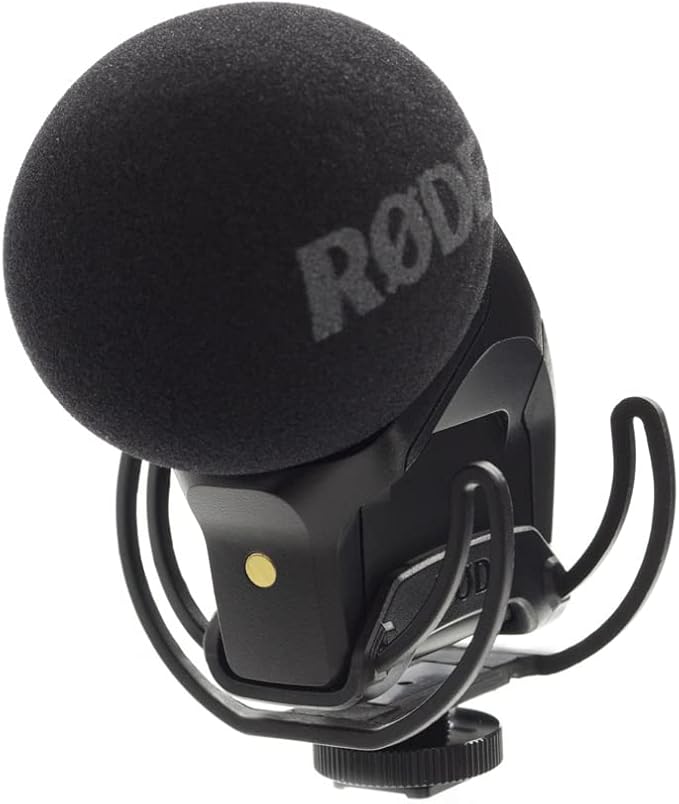
Rode VideoMic NTG - On Camera Shotgun Microphone
The versatile and highly regarded Rode VideoMic NTG is ideal for filmmakers, podcasters, and content creators who require the sound of their shotguns to be heard from their devices. It features a built-in camera and microphone that doesn't require additional adapters. The VideoMic NTG features a flexible and transparent design that allows users to create their own unique sound. Its built-in microphone and digital tone controls are also ideal for podcasts and videos. Its aluminum housing is durable and lightweight, making it an ideal choice for people who use it on a boom pole or camera. The included 3.5mm TRS cable and auto-sensing output are designed to work seamlessly with various devices, such as portable recorders and cameras. Its built-in safety channel and peak warning light can help minimize distortion in your videos. Its 3.5mm jack can also be used as a stereo headphone source to monitor your signal. Firmware 2.0 has been released, which adds MFi-certification for the VideoMic NTG. It can be used with Apple devices with Lightning connections, such as the iPhone, iPad, and iPod.
The versatile and highly regarded Rode VideoMic NTG is ideal for filmmakers, podcasters, and content creators who require the sound of their shotguns to be heard from their devices. It features a built-in camera and microphone that doesn't require additional adapters. The VideoMic NTG features a flexible and transparent design that allows users to create their own unique sound. Its built-in microphone and digital tone controls are also ideal for podcasts and videos. Its aluminum housing is durable and lightweight, making it an ideal choice for people who use it on a boom pole or camera. The included 3.5mm TRS cable and auto-sensing output are designed to work seamlessly with various devices, such as portable recorders and cameras. Its built-in safety channel and peak warning light can help minimize distortion in your videos. Its 3.5mm jack can also be used as a stereo headphone source to monitor your signal. Firmware 2.0 has been released, which adds MFi-certification for the VideoMic NTG. It can be used with Apple devices with Lightning connections, such as the iPhone, iPad, and iPod.
The versatile and highly regarded Rode VideoMic NTG is ideal for filmmakers, podcasters, and content creators who require the sound of their shotguns to be heard from their devices. It features a built-in camera and microphone that doesn't require additional adapters. The VideoMic NTG features a flexible and transparent design that allows users to create their own unique sound. Its built-in microphone and digital tone controls are also ideal for podcasts and videos. Its aluminum housing is durable and lightweight, making it an ideal choice for people who use it on a boom pole or camera. The included 3.5mm TRS cable and auto-sensing output are designed to work seamlessly with various devices, such as portable recorders and cameras. Its built-in safety channel and peak warning light can help minimize distortion in your videos. Its 3.5mm jack can also be used as a stereo headphone source to monitor your signal. Firmware 2.0 has been released, which adds MFi-certification for the VideoMic NTG. It can be used with Apple devices with Lightning connections, such as the iPhone, iPad, and iPod.
The versatile and highly regarded Rode VideoMic NTG is ideal for filmmakers, podcasters, and content creators who require the sound of their shotguns to be heard from their devices. It features a built-in camera and microphone that doesn't require additional adapters. The VideoMic NTG features a flexible and transparent design that allows users to create their own unique sound. Its built-in microphone and digital tone controls are also ideal for podcasts and videos. Its aluminum housing is durable and lightweight, making it an ideal choice for people who use it on a boom pole or camera. The included 3.5mm TRS cable and auto-sensing output are designed to work seamlessly with various devices, such as portable recorders and cameras. Its built-in safety channel and peak warning light can help minimize distortion in your videos. Its 3.5mm jack can also be used as a stereo headphone source to monitor your signal. Firmware 2.0 has been released, which adds MFi-certification for the VideoMic NTG. It can be used with Apple devices with Lightning connections, such as the iPhone, iPad, and iPod.
in 5 offers
The lowest price for Rode VideoMic NTG - On Camera Shotgun Microphone right now is $330.76 at Amazon.com.au, compared across 5 retailers.
The all-time low was $23.10 on 7 May 2026 — today's price is 1332% above the lowest ever. It has been notably cheaper before — worth setting a price alert.
Prices last updated 11 Oct 2026.
Last updated at 11/10/2026 23:13:45
RØDE Microphones VideoMic NTG Premium On-Camera and USB Shotgun Microphone Black
Affiliate Disclosure: We may receive a small commission for purchases made through this link at no extra cost to you. This helps support our site. Thank you!
Rode VideoMic NTG shotgun microphone
Delivery between 12–26 Oct $62.13
Rode VideoMic NTG Camera-Mount Shotgun Microphone
Delivery $5.90
Rode VideoMic NTG Hybrid Analog USB Shotgun Microphone
Delivery between 15–20 Oct $15.52
RODE VideoMic NTG - On Camera Shotgun Microphone
Free delivery between 15–21 Oct
originally posted on bhphotovideo.com
I do not have a video camera currently that uses a shoe mount , although I am hoping to get one in the future. I picked this mic up specifically for use with Zoom calls and live streaming, in the hopes that it would also be useful for video recording when I have a suitable camera. My kids have group meetings for a choir and unfortunately due to the pandemic they have moved everything online. I wanted to try to get better audio for their calls than we were getting out of a built-in laptop microphone, especially since they are asked to stand and sit and sing a few feet away from the computer so they can't maintain a position close to the built-in microphone. This microphone is quite well-built and solid. I have some Rode NT-5 microphones I bought a dozen years ago and ... MoreI do not have a video camera currently that uses a shoe mount , although I am hoping to get one in the future. I picked this mic up specifically for use with Zoom calls and live streaming, in the hopes that it would also be useful for video recording when I have a suitable camera. My kids have group meetings for a choir and unfortunately due to the pandemic they have moved everything online. I wanted to try to get better audio for their calls than we were getting out of a built-in laptop microphone, especially since they are asked to stand and sit and sing a few feet away from the computer so they can't maintain a position close to the built-in microphone. This microphone is quite well-built and solid. I have some Rode NT-5 microphones I bought a dozen years ago and this seems to have a similar feel. I plugged this into a Windows laptop and it worked immediately, with the driver installed automatically, with no issues at all. It usually acts as a mono device, sending the same audio to each channel, but there is a neat trick it can do. If you turn on a special mode, it will send the normal audio level to the left channel, but send an attenuated level on the right channel. If you are recording, and something causes the mic to clip, this means you might be able to repair the recording by using the right channel data, which is less likely to be clipped. The auto-sensing headphone/audio out jack is a neat feature as well. It allows you to plug a pair of headphones directly into the mic to monitor what it is recording. You can also use this jack to plug it into a camera or recorder. That's a nifty feature. The built-in rechargeable battery is also a nice touch. I'm not really using it yet since it is plugged into a laptop using the included USB cable, but it is nice to know that I can also unplug it and use it to feed a recorder. I want to try it with my Sound Devices MixPre-6 II at some point, although I have not experimented with that yet. The audio quality is quite good. It might not impress a location sound engineer as much as one of Rode's large, thousand-dollar shotgun microphones, but to me it sounds very clear, with a low noise floor, and is quite crisp. So I'm very happy with it. I'd like to point out that it uses Euro-style mounting hardware. I was originally planning to use tripods or mic stand adapters with 1/4 diameter mounting screws with 20 threading. Be aware that this fits 3/8 diameter mounting screws with 16 threading. So you might need a stand mount adapter. Some of the B&H bundles come with adapters that might be suitable for you. I initially took mine out of the included shock mount and put it in one of the clips that came with my Rode NT-5 microphones, and that worked fine, but later found a Rode mic stand adapter that works fine and allows me to use the included shock mount. Overall, I'm very pleased with this device, a solid and very cleverly-designed little product.
originally posted on bhphotovideo.com
The NTG is a great hybrid mic. I'll attach it to the end of a boom and run into a Wireless Go II transmitter for an easy wireless boom that is quick and easy to move around. It's great not having to deal with a cord back to the camera or recorder. With the Wireless Go II's built in recorder I get nice clean audio that can be synced in post. I also use it for video calls. I run it into the line input of my Scarlett 8i6 and have the cleanest audio of anyone on the call. The internal battery lasts a long time and the rotary volume knob makes adding more gain very quick and easy. I have used the USB out, although it doesn't work well if you want to use headphones on a video call and still hear others because you have to monitor from the output on the mic so you'll hear ... MoreThe NTG is a great hybrid mic. I'll attach it to the end of a boom and run into a Wireless Go II transmitter for an easy wireless boom that is quick and easy to move around. It's great not having to deal with a cord back to the camera or recorder. With the Wireless Go II's built in recorder I get nice clean audio that can be synced in post. I also use it for video calls. I run it into the line input of my Scarlett 8i6 and have the cleanest audio of anyone on the call. The internal battery lasts a long time and the rotary volume knob makes adding more gain very quick and easy. I have used the USB out, although it doesn't work well if you want to use headphones on a video call and still hear others because you have to monitor from the output on the mic so you'll hear yourself but not others. Therefore, using the analog output and a 1/8 to 1/4 adapter and going into the line input seems to work the best. If I was recording into my DAW though, I would use the USB output for the cleanest digital audio possible.
originally posted on bhphotovideo.com
This mic has all the features you could want for a run and gun shooting setup. My favorite feature is the duel levels recording, so if you peak on one channel you can just use the other channel. Another awesome feature is the gain dial on the back of the mic. Great for dialing your audio if something needs adjusted on the fly. Finally the auto on and off is quite amazing. I no longer have to worry about remembering to turn my mic on, as in the past with other mics I've recorded clips with no audio because of this. Great product, RODE!
| Connector Type | USB-C |
| Interfaces | USB-C |
| Wireless Technology | Wired |
| Battery Life | 30+ hours |
| Included Accessories | Shock mount |

RØDE Microphones VideoMic NTG Premium On-Camera and USB Shotgun Microphone Black
Affiliate Disclosure: We may receive a small commission for purchases made through this link at no extra cost to you. This helps support our site. Thank you!
Rode VideoMic NTG shotgun microphone
Delivery between 12–26 Oct $62.13
Rode VideoMic NTG Camera-Mount Shotgun Microphone
Delivery $5.90
Rode VideoMic NTG Hybrid Analog USB Shotgun Microphone
Delivery between 15–20 Oct $15.52
RODE VideoMic NTG - On Camera Shotgun Microphone
Free delivery between 15–21 Oct
I do not have a video camera currently that uses a shoe mount , although I am hoping to get one in the future. I picked this mic up specifically for use with Zoom calls and live streaming, in the hopes that it would also be useful for video recording when I have a suitable camera. My kids have group meetings for a choir and unfortunately due to the pandemic they have moved everything online. I wanted to try to get better audio for their calls than we were getting out of a built-in laptop microphone, especially since they are asked to stand and sit and sing a few feet away from the computer so they can't maintain a position close to the built-in microphone. This microphone is quite well-built and solid. I have some Rode NT-5 microphones I bought a dozen years ago and ... MoreI do not have a video camera currently that uses a shoe mount , although I am hoping to get one in the future. I picked this mic up specifically for use with Zoom calls and live streaming, in the hopes that it would also be useful for video recording when I have a suitable camera. My kids have group meetings for a choir and unfortunately due to the pandemic they have moved everything online. I wanted to try to get better audio for their calls than we were getting out of a built-in laptop microphone, especially since they are asked to stand and sit and sing a few feet away from the computer so they can't maintain a position close to the built-in microphone. This microphone is quite well-built and solid. I have some Rode NT-5 microphones I bought a dozen years ago and this seems to have a similar feel. I plugged this into a Windows laptop and it worked immediately, with the driver installed automatically, with no issues at all. It usually acts as a mono device, sending the same audio to each channel, but there is a neat trick it can do. If you turn on a special mode, it will send the normal audio level to the left channel, but send an attenuated level on the right channel. If you are recording, and something causes the mic to clip, this means you might be able to repair the recording by using the right channel data, which is less likely to be clipped. The auto-sensing headphone/audio out jack is a neat feature as well. It allows you to plug a pair of headphones directly into the mic to monitor what it is recording. You can also use this jack to plug it into a camera or recorder. That's a nifty feature. The built-in rechargeable battery is also a nice touch. I'm not really using it yet since it is plugged into a laptop using the included USB cable, but it is nice to know that I can also unplug it and use it to feed a recorder. I want to try it with my Sound Devices MixPre-6 II at some point, although I have not experimented with that yet. The audio quality is quite good. It might not impress a location sound engineer as much as one of Rode's large, thousand-dollar shotgun microphones, but to me it sounds very clear, with a low noise floor, and is quite crisp. So I'm very happy with it. I'd like to point out that it uses Euro-style mounting hardware. I was originally planning to use tripods or mic stand adapters with 1/4 diameter mounting screws with 20 threading. Be aware that this fits 3/8 diameter mounting screws with 16 threading. So you might need a stand mount adapter. Some of the B&H bundles come with adapters that might be suitable for you. I initially took mine out of the included shock mount and put it in one of the clips that came with my Rode NT-5 microphones, and that worked fine, but later found a Rode mic stand adapter that works fine and allows me to use the included shock mount. Overall, I'm very pleased with this device, a solid and very cleverly-designed little product.
The NTG is a great hybrid mic. I'll attach it to the end of a boom and run into a Wireless Go II transmitter for an easy wireless boom that is quick and easy to move around. It's great not having to deal with a cord back to the camera or recorder. With the Wireless Go II's built in recorder I get nice clean audio that can be synced in post. I also use it for video calls. I run it into the line input of my Scarlett 8i6 and have the cleanest audio of anyone on the call. The internal battery lasts a long time and the rotary volume knob makes adding more gain very quick and easy. I have used the USB out, although it doesn't work well if you want to use headphones on a video call and still hear others because you have to monitor from the output on the mic so you'll hear ... MoreThe NTG is a great hybrid mic. I'll attach it to the end of a boom and run into a Wireless Go II transmitter for an easy wireless boom that is quick and easy to move around. It's great not having to deal with a cord back to the camera or recorder. With the Wireless Go II's built in recorder I get nice clean audio that can be synced in post. I also use it for video calls. I run it into the line input of my Scarlett 8i6 and have the cleanest audio of anyone on the call. The internal battery lasts a long time and the rotary volume knob makes adding more gain very quick and easy. I have used the USB out, although it doesn't work well if you want to use headphones on a video call and still hear others because you have to monitor from the output on the mic so you'll hear yourself but not others. Therefore, using the analog output and a 1/8 to 1/4 adapter and going into the line input seems to work the best. If I was recording into my DAW though, I would use the USB output for the cleanest digital audio possible.
This mic has all the features you could want for a run and gun shooting setup. My favorite feature is the duel levels recording, so if you peak on one channel you can just use the other channel. Another awesome feature is the gain dial on the back of the mic. Great for dialing your audio if something needs adjusted on the fly. Finally the auto on and off is quite amazing. I no longer have to worry about remembering to turn my mic on, as in the past with other mics I've recorded clips with no audio because of this. Great product, RODE!
I own the Rode stereo Videomic pro but this can sometimes get too much ambient sound, so I wanted a powered cardiod microphone and reviews seemed generally good for this. Its sensitivity (to me at least) is incredible picking up sounds ahead incredibly well with a good balance of surrounding sound to give a little ambient sound too. The safety track is a good feature though, with the few occasions I've used the mic, this has been unnecessary as I've set the gain well and not had any unexpectedly loud sounds. Used it with my DJI Pocket 2 and Sony RX100 Mark VII both directly and via my Zoom H1n, I prefer the latter but it depends upon my requirements and setup time. On both cameras I've got the camera gain right down at 1db, on the H1n I set it accordingly to the ... MoreI own the Rode stereo Videomic pro but this can sometimes get too much ambient sound, so I wanted a powered cardiod microphone and reviews seemed generally good for this. Its sensitivity (to me at least) is incredible picking up sounds ahead incredibly well with a good balance of surrounding sound to give a little ambient sound too. The safety track is a good feature though, with the few occasions I've used the mic, this has been unnecessary as I've set the gain well and not had any unexpectedly loud sounds. Used it with my DJI Pocket 2 and Sony RX100 Mark VII both directly and via my Zoom H1n, I prefer the latter but it depends upon my requirements and setup time. On both cameras I've got the camera gain right down at 1db, on the H1n I set it accordingly to the display bargraphs. Autopower up/down is a boon and works well with my cameras and various rode or generic TRS cables I've used. Build quality is great, seems really premium. I bought a cheap deadcat for £13 from Amazon as opposed to the Rode's overpriced one.
Phenomenal! We used this for our wedding live-streamed via Zoom. Our guests were convinced we used lavalier mics, but in reality it was just this one fantastic little mic. Paired with Rde's dead cat windshield (purchased separately) to cut the wind noise, this mic actually picked up audio that we couldn't hear in person due to airplanes flying over. AUDIO QUALITY Perfect. I don't think you could get anything better without paying significantly more. BUILD QUALITY Exceptionally sturdy. Much higher than expected. CONTROLS Just two buttons and one dial. Super easy. Note: the dial only controls the audio levels via the 3.5mm audio out jackNOT the USB connection. When connected via USB, the audio levels are be controlled by software. CONNECTIVITY Can connect to a camera ... MorePhenomenal! We used this for our wedding live-streamed via Zoom. Our guests were convinced we used lavalier mics, but in reality it was just this one fantastic little mic. Paired with Rde's dead cat windshield (purchased separately) to cut the wind noise, this mic actually picked up audio that we couldn't hear in person due to airplanes flying over. AUDIO QUALITY Perfect. I don't think you could get anything better without paying significantly more. BUILD QUALITY Exceptionally sturdy. Much higher than expected. CONTROLS Just two buttons and one dial. Super easy. Note: the dial only controls the audio levels via the 3.5mm audio out jackNOT the USB connection. When connected via USB, the audio levels are be controlled by software. CONNECTIVITY Can connect to a camera using a standard 3.5mm audio jack. For a phone, you'll need a TRS to TRRS adapter, available from Rde, or I'm sure you can purchase a cheaper one elsewhere. To connect to an iPhone 7 or later (the models without a headphone jack), you'll need Apple's "Lightning to USB 3 Camera Adapter" AND an external power source such as a wall charger or battery pack if you're using this in the field. Without the external power source, the phone will tell you that the microphone has insufficient power. (Note: for the Apple adapter, the "USB 3" is necessary, as it includes a secondary Lightning port so you can connect an external power supply. Confusingly, Apple's similarly named "Lightning to USB Camera Adapter" does NOT include the extra port and therefore will not work.)
Hey guys Florent from Of Two Lands here and know I just came back from a trip to Antarctica and I thought I would make a review about it since it is the only mic I used for the past 2 months. You can watch the review here or read below : https://www.youtube.com/watch?v=Dx1WwJMB8Ec&t=159s I travel a lot and I like to shoot handheld and run and gun so for me having gear that is light, sturdy without compromising quality is essential For my trip to Antarctica being nimble was essential. And since I also had to go through quarantine for 14days when arriving in Australia I actually used it as a Voice over mic during my time in the hotel. Things I like about it: Size and weight Ability to use it on computer USB charging takes about 2hrs and lasts 30 Quality of sound Gain ... MoreHey guys Florent from Of Two Lands here and know I just came back from a trip to Antarctica and I thought I would make a review about it since it is the only mic I used for the past 2 months. You can watch the review here or read below : https://www.youtube.com/watch?v=Dx1WwJMB8Ec&t=159s I travel a lot and I like to shoot handheld and run and gun so for me having gear that is light, sturdy without compromising quality is essential For my trip to Antarctica being nimble was essential. And since I also had to go through quarantine for 14days when arriving in Australia I actually used it as a Voice over mic during my time in the hotel. Things I like about it: Size and weight Ability to use it on computer USB charging takes about 2hrs and lasts 30 Quality of sound Gain control as the back Turns on automatically when powering cameras on (both bmpcc6k and Eos R) Great battery even in the cold Mount / cable management system -20 channel Headphone monitoring Things I don’t like about it: Gain control at the back can be knocked and settings might change as it happens with me when the mic was bouncing against my jacket a few times Auto power on didn’t work on a few occasions, especially when filming straight away after powering on the camera, better to wait a couple of seconds No battery indicators which can be frustrating and it means that I had to keep charging it just in case. What could be improved (not a lot) : Battery indicators would be helpful Mount to be slight smaller for the size of the mic Would be nice if you could lock the gain control at the back Who is this for ? I think this mic is great for anyone wanting great sound quality for a wide variety of uses. Wether you are doing YouTube videos or documentaries, podcasts or interviews this mic can pretty much do anything and quite well too. If you only need an on camera mic or only a YouTube mic then maybe you can find other options that might be cheaper. But with the Rode Videomic NTG you have a mic that can cover pretty much all bases and to me it is something very valuable. If you intend to do a bunch of different type of work, especially in the world we live in at the moment, then this mic is probably the best choice. By the way the review was also recorded using the Videomic NTG. Hope this is helpful :). Cheers, Flo
I've had the Rode Video Mic NTG for about a 3 weeks now. I've owned the Rode Video Mic Pro and Rode VideoMic Pro+ and this is a very worthy upgrade that improves upon the Rode VideoMic Pro+. The addition of the infinite gain knob, sliding mount, and ability to be used as a USB microphone via a USB-C microphone makes the VideoMic NTG a versatile microphone. Furthermore, because this microphone has a USB port, Rode is able to push out firmware updates to it. About a week of ownership Rode pushed out a firmware update to the microphone to remove hisses users were reporting. This is a very unique feature the previous VideoMics did not have. A few disadvantages this microphone has are: the built in battery and the decreased Maximum Sound Pressure Level (SPL) compared to ... MoreI've had the Rode Video Mic NTG for about a 3 weeks now. I've owned the Rode Video Mic Pro and Rode VideoMic Pro+ and this is a very worthy upgrade that improves upon the Rode VideoMic Pro+. The addition of the infinite gain knob, sliding mount, and ability to be used as a USB microphone via a USB-C microphone makes the VideoMic NTG a versatile microphone. Furthermore, because this microphone has a USB port, Rode is able to push out firmware updates to it. About a week of ownership Rode pushed out a firmware update to the microphone to remove hisses users were reporting. This is a very unique feature the previous VideoMics did not have. A few disadvantages this microphone has are: the built in battery and the decreased Maximum Sound Pressure Level (SPL) compared to the Rode Video Mic Pro +. There is no way of telling what the battery level of the microphone is. The only indication is a green light that indicates the battery has at least 10+ hours left. When this light is no longer a solid green line it means there are 10 hours left of the battery. It would have been nice to be able to have some way of indicating how much battery is left. However, what one can do it circumvent this problem is to plug in the mic to a USB power source, as the battery can be powered through USB for indefinite recording time. The Rode VideoMic Pro+ has a maximum SPL of 133dbSPL while the VideoMic has a maximum SPL of 120dbSPL which means the Rode VideoMic Pro+ has a slight advantage at recording louder environments like concerts. Overall I am very satisfied with this microphone and it, for me, is a worthy upgrade from the Rode VideoMic Pro+ due to its increased versatility. I would definitely recommend this for anyone looking for a versatile microphone.
Most of my video work is getting impromptu interviews in very noisy situations. Up to now, I had to get the subject to hold a voice recorder and sync the tracks later. It worked very well but required extra steps at both ends. With this mic, so long as the source of the worst ambient noise is not directly in front of you, one can get a pretty clear and easy to understand interview with just enough ambient noise to maintain the sense of the event. Its several less steps than the previous method. Also setting it up to record 2 tracks, one at -20 and one at zero also saves you from clipped audio tracks. All you have to remember is, have your back to the main source of undesired audio like PA speakers or a screaming crowd. You don't even have to have your subject move ... MoreMost of my video work is getting impromptu interviews in very noisy situations. Up to now, I had to get the subject to hold a voice recorder and sync the tracks later. It worked very well but required extra steps at both ends. With this mic, so long as the source of the worst ambient noise is not directly in front of you, one can get a pretty clear and easy to understand interview with just enough ambient noise to maintain the sense of the event. Its several less steps than the previous method. Also setting it up to record 2 tracks, one at -20 and one at zero also saves you from clipped audio tracks. All you have to remember is, have your back to the main source of undesired audio like PA speakers or a screaming crowd. You don't even have to have your subject move that far from the event. Just move to have no additional audio source behind the subject.
This microphone is normally fantastic. I've been using it for work, connected to my computer, for the past 8 months, since purchasing it from B&H (now it's outside the return window). Its Achilles heel is the battery, which is not user-serviceable. I knew this going in, and decided to purchase anyway for the following reasons: 1) I'm not using this in a mobile setting, connected to a camera. It's going to be plugged into a computer via USB whenever in use, so if the battery life degrades over time I wouldn't care. 2) Rode offers a 10-year warranty (which covers battery replacement) if you register your purchase (from an authorized reseller such as B&H) with them. Which I did. Unfortunately the battery comes into play in another crucial way. When connected to a USB ... MoreThis microphone is normally fantastic. I've been using it for work, connected to my computer, for the past 8 months, since purchasing it from B&H (now it's outside the return window). Its Achilles heel is the battery, which is not user-serviceable. I knew this going in, and decided to purchase anyway for the following reasons: 1) I'm not using this in a mobile setting, connected to a camera. It's going to be plugged into a computer via USB whenever in use, so if the battery life degrades over time I wouldn't care. 2) Rode offers a 10-year warranty (which covers battery replacement) if you register your purchase (from an authorized reseller such as B&H) with them. Which I did. Unfortunately the battery comes into play in another crucial way. When connected to a USB host device (such as my computer), the onboard power button does nothing -- it only works when being powered off battery. So when plugged in via USB, the microphone powers on automatically when the host device is on and communicating, and off when the host device turns off. This logic in the microphone's firmware is buggy, and it apparently can rarely (but if you're using it for a while you may eventually run into it at which point you're hosed) get into a bad state where it will stay on no matter what, and be non-communicative over USB, until the battery dies (which can take days). Because there is this battery, and it is not removable, and there is no reset button/hole or anything, once the microphone is in this state it's effectively bricked until the battery dies. Search reddit's r/rode subreddit for posts about videomic ntg and blinking/flashing green, you'll see several reports of this. Now, Rode has graciously offered to cover my return shipping (not normally covered), and my interactions with them have been fantastic so far, so props where it's due. But if this happens again, I'll have to look for something else. If I can't rely on it working, it doesn't matter how good its audio quality is. BTW if you're looking for a microphone just for home video conferencing like I was, you might want to consider the Rode VideoMic GO II, which B&H also sells. I have no experience with it myself, but it seems to have good enough audio quality (not as good as NTG but for indoor video conferencing where you'll be close enough to the mic, there'll be less noise, and the audio will be compressed by the software anyway, it may not matter), no hardware filter control buttons like the NTG has (but can still be done in Rode's software on Windows/Mac, doesn't matter for me I wasn't using these filters on my NTG anyway), and most importantly it has no battery. So even if the GO II had the same firmware issue (for which I have no evidence for or against), at least you could unplug it and plug it back in.
I purchased this as a webcam for a disability workstation. There is 15' between the computer and where the WebCam would be mounted in an overhead position. Unfortunately, this didn't work: (a) USB length is really limited, and various extenders including USB over Cat6 don't carry the signal for use of the microphone 15' away; (b) while the 3.5mm patch cable works lovely while the battery is on, as soon as you plug in USB power, there is too much line noise; (c) in order to get reasonable sound in an untreated room as a webcam, the gain had to be 13/15, and, at this setting, lots of other noise was picked up despite high pass filter. I think the intended use of this microphone is outdoors, battery operated, on top of a camera. In this situation, it probably shines.
| Connector Type | USB-C |
| Interfaces | USB-C |
| Wireless Technology | Wired |
| Battery Life | 30+ hours |
| Included Accessories | Shock mount |