Last updated at 26/08/2026 22:02:48
[Archer AX1800] Dual-Band Wi-Fi 6 Router, Super-Fast 1.8Gbps Wi-Fi, One Mesh
Free delivery between Fri – Sat
[Archer AX1800] Dual-Band Wi-Fi 6 Router, Super-Fast 1.8Gbps Wi-Fi, One Mesh
Delivery between Sat – Wed $10
[Archer AX1800] Dual-Band Wi-Fi 6 Router, Super-Fast 1.8Gbps Wi-Fi, One Mesh
Delivery $14.95
[Archer AX1800] Dual-Band Wi-Fi 6 Router, Super-Fast 1.8Gbps Wi-Fi, One Mesh
Delivery $14.95
originally posted on pbtech.co.nz
I had one of these, and to improve coverage I added a second in a mesh configuration. I do not like the app, but that seems to be the only way to configure a mesh. When meshed, the reliability dropped through the floor, requiring a reboots of the "master" node regularly as the wifi had simply failed. In addition, there were weird performance problems.Removing the mesh node completely restored reliability. As a mesh solution, this device was a miserable failure.The management of these things is frankly annoying. There's a web interface and an app, and neither do everything. The management seems like it wants to be in router mode, but the router functionality is far too basic for my needs so I needed to use it in bridge mode, and it really feels like bridge mode ... MoreI had one of these, and to improve coverage I added a second in a mesh configuration. I do not like the app, but that seems to be the only way to configure a mesh. When meshed, the reliability dropped through the floor, requiring a reboots of the "master" node regularly as the wifi had simply failed. In addition, there were weird performance problems.Removing the mesh node completely restored reliability. As a mesh solution, this device was a miserable failure.The management of these things is frankly annoying. There's a web interface and an app, and neither do everything. The management seems like it wants to be in router mode, but the router functionality is far too basic for my needs so I needed to use it in bridge mode, and it really feels like bridge mode was an afterthought. For example, there's no way to set the NTP parameters in bridge mode - it's all greyed out. (And can only be done via the web interface, not the app.) So it's stuck on the wrong timezone (because that's greyed out), which means the thing isn't doing its automatic software updates at the right time,. Actually, I can find no evidence that it is doing updates at all.In bridge mode, the guest network feature does nothing useful - there's no VLAN capability, and no filtering, so if someone joins your "guest" network, they've joined your WHOLE network. A VLAN capability would be useful here, but ... well, it doesn't have that.Basically:* As a basic, stand-alone WiFi 6 AP, it works fine.* Mesh capability: utter garbage* Management tools: utter garbage* Advanced capabilities: almost non-existent.
originally posted on walmart.com
My old router couldn't keep up with the new minimum speed my cable company provides. Service is 300mbps but my router hit its limit at 200mbps over ethernet. I didn't want to spend a lot so the AX1800 looked good at $58.89 on sale. I'm surprised how much this router does for the money. My speed test jumped from 200 to 350mbps and the CPU never went over 25%. Looks like it could easily handle gigabit internet speed.It doesn't provide nearly as many features and options as my old commercial firewall but it gives me the basics that I need. There are a few features I wasn't expecting to find in a bottom-end WiFi 6 router. It has a VPN server so I can connect to my home network remotely. There's a DDNS updater, parental controls, QoS, and support for mesh devices. It ... MoreMy old router couldn't keep up with the new minimum speed my cable company provides. Service is 300mbps but my router hit its limit at 200mbps over ethernet. I didn't want to spend a lot so the AX1800 looked good at $58.89 on sale. I'm surprised how much this router does for the money. My speed test jumped from 200 to 350mbps and the CPU never went over 25%. Looks like it could easily handle gigabit internet speed.It doesn't provide nearly as many features and options as my old commercial firewall but it gives me the basics that I need. There are a few features I wasn't expecting to find in a bottom-end WiFi 6 router. It has a VPN server so I can connect to my home network remotely. There's a DDNS updater, parental controls, QoS, and support for mesh devices. It even has a USB port to connect a hard drive for file sharing and Time Machine. Tho it's only USB 2 so it won't be very fast. But faster than nothing and I wasn't expecting it because it's not in the product description.You can get faster WiFi performance from more expensive routers but, if you don't need to push huge amounts of data over wireless, this router is a great option.
originally posted on walmart.com
This is my second acquisition of a TP-Link router. My current router is an Archer C9, which is still in use after many years. I have had no problems with this router over that time. I find that these TP-Link routers are the best of affordability and performance. Sure, you may not get the performance of a router costing twice the price, but I find that the performance is quite adequate for a typical home.I thought about using this as a second router to provide a second network for security purposes. By having a second network, I can have friends who are in my house wanting to connect to the network use the second router. That way they don’t have access to my main network. Or, if I need to check out a person’s computer and I do not know if there might be malware on ... MoreThis is my second acquisition of a TP-Link router. My current router is an Archer C9, which is still in use after many years. I have had no problems with this router over that time. I find that these TP-Link routers are the best of affordability and performance. Sure, you may not get the performance of a router costing twice the price, but I find that the performance is quite adequate for a typical home.I thought about using this as a second router to provide a second network for security purposes. By having a second network, I can have friends who are in my house wanting to connect to the network use the second router. That way they don’t have access to my main network. Or, if I need to check out a person’s computer and I do not know if there might be malware on the computer, I can connect it to the Internet without worrying about any access by the malware to my main network. But then I saw an option in the router software to use something called access mode. This allows you to add wireless capability at a remote location. You still need to hook this router to your main router via an Ethernet cable, however. Then you can use guest mode for friends or when you want to prevent access to the main network.For the price, this seems to be an impressive router. It sports a 1.5GHz quad-core CPU and four fixed Omni-directional antennas, which support beamforming technology to focus signal strength for your devices. Beamforming is a technique that focuses the wireless signal toward a specific receiving device. It also supports the latest Wi-Fi 6 technology, which uses something called OFDMA technology to communicate more data to more devices at the same time. OFDMA allows one transmission to deliver data to multiple devices at one time. Of course, your devices must support the standard. If not, hey you’re future proof. This standard becomes important as you connect more devices to the network. You also can set up the router using the Tether app for smartphones. I did not try out this option as I did not need this feature.The theoretical claimed speeds are 1200 Mbps on 5GHz and 574 Mbps on the 2.4 GHz band. Your actual throughput will, of course, be less and will depend on obstacles between you and the router, and on the distance from the router.
| Processor | Dual-Core CPU |
[Archer AX1800] Dual-Band Wi-Fi 6 Router, Super-Fast 1.8Gbps Wi-Fi, One Mesh
Free delivery between Fri – Sat
[Archer AX1800] Dual-Band Wi-Fi 6 Router, Super-Fast 1.8Gbps Wi-Fi, One Mesh
Delivery between Sat – Wed $10
[Archer AX1800] Dual-Band Wi-Fi 6 Router, Super-Fast 1.8Gbps Wi-Fi, One Mesh
Delivery $14.95
[Archer AX1800] Dual-Band Wi-Fi 6 Router, Super-Fast 1.8Gbps Wi-Fi, One Mesh
Delivery $14.95
I had one of these, and to improve coverage I added a second in a mesh configuration. I do not like the app, but that seems to be the only way to configure a mesh. When meshed, the reliability dropped through the floor, requiring a reboots of the "master" node regularly as the wifi had simply failed. In addition, there were weird performance problems.Removing the mesh node completely restored reliability. As a mesh solution, this device was a miserable failure.The management of these things is frankly annoying. There's a web interface and an app, and neither do everything. The management seems like it wants to be in router mode, but the router functionality is far too basic for my needs so I needed to use it in bridge mode, and it really feels like bridge mode ... MoreI had one of these, and to improve coverage I added a second in a mesh configuration. I do not like the app, but that seems to be the only way to configure a mesh. When meshed, the reliability dropped through the floor, requiring a reboots of the "master" node regularly as the wifi had simply failed. In addition, there were weird performance problems.Removing the mesh node completely restored reliability. As a mesh solution, this device was a miserable failure.The management of these things is frankly annoying. There's a web interface and an app, and neither do everything. The management seems like it wants to be in router mode, but the router functionality is far too basic for my needs so I needed to use it in bridge mode, and it really feels like bridge mode was an afterthought. For example, there's no way to set the NTP parameters in bridge mode - it's all greyed out. (And can only be done via the web interface, not the app.) So it's stuck on the wrong timezone (because that's greyed out), which means the thing isn't doing its automatic software updates at the right time,. Actually, I can find no evidence that it is doing updates at all.In bridge mode, the guest network feature does nothing useful - there's no VLAN capability, and no filtering, so if someone joins your "guest" network, they've joined your WHOLE network. A VLAN capability would be useful here, but ... well, it doesn't have that.Basically:* As a basic, stand-alone WiFi 6 AP, it works fine.* Mesh capability: utter garbage* Management tools: utter garbage* Advanced capabilities: almost non-existent.
My old router couldn't keep up with the new minimum speed my cable company provides. Service is 300mbps but my router hit its limit at 200mbps over ethernet. I didn't want to spend a lot so the AX1800 looked good at $58.89 on sale. I'm surprised how much this router does for the money. My speed test jumped from 200 to 350mbps and the CPU never went over 25%. Looks like it could easily handle gigabit internet speed.It doesn't provide nearly as many features and options as my old commercial firewall but it gives me the basics that I need. There are a few features I wasn't expecting to find in a bottom-end WiFi 6 router. It has a VPN server so I can connect to my home network remotely. There's a DDNS updater, parental controls, QoS, and support for mesh devices. It ... MoreMy old router couldn't keep up with the new minimum speed my cable company provides. Service is 300mbps but my router hit its limit at 200mbps over ethernet. I didn't want to spend a lot so the AX1800 looked good at $58.89 on sale. I'm surprised how much this router does for the money. My speed test jumped from 200 to 350mbps and the CPU never went over 25%. Looks like it could easily handle gigabit internet speed.It doesn't provide nearly as many features and options as my old commercial firewall but it gives me the basics that I need. There are a few features I wasn't expecting to find in a bottom-end WiFi 6 router. It has a VPN server so I can connect to my home network remotely. There's a DDNS updater, parental controls, QoS, and support for mesh devices. It even has a USB port to connect a hard drive for file sharing and Time Machine. Tho it's only USB 2 so it won't be very fast. But faster than nothing and I wasn't expecting it because it's not in the product description.You can get faster WiFi performance from more expensive routers but, if you don't need to push huge amounts of data over wireless, this router is a great option.
This is my second acquisition of a TP-Link router. My current router is an Archer C9, which is still in use after many years. I have had no problems with this router over that time. I find that these TP-Link routers are the best of affordability and performance. Sure, you may not get the performance of a router costing twice the price, but I find that the performance is quite adequate for a typical home.I thought about using this as a second router to provide a second network for security purposes. By having a second network, I can have friends who are in my house wanting to connect to the network use the second router. That way they don’t have access to my main network. Or, if I need to check out a person’s computer and I do not know if there might be malware on ... MoreThis is my second acquisition of a TP-Link router. My current router is an Archer C9, which is still in use after many years. I have had no problems with this router over that time. I find that these TP-Link routers are the best of affordability and performance. Sure, you may not get the performance of a router costing twice the price, but I find that the performance is quite adequate for a typical home.I thought about using this as a second router to provide a second network for security purposes. By having a second network, I can have friends who are in my house wanting to connect to the network use the second router. That way they don’t have access to my main network. Or, if I need to check out a person’s computer and I do not know if there might be malware on the computer, I can connect it to the Internet without worrying about any access by the malware to my main network. But then I saw an option in the router software to use something called access mode. This allows you to add wireless capability at a remote location. You still need to hook this router to your main router via an Ethernet cable, however. Then you can use guest mode for friends or when you want to prevent access to the main network.For the price, this seems to be an impressive router. It sports a 1.5GHz quad-core CPU and four fixed Omni-directional antennas, which support beamforming technology to focus signal strength for your devices. Beamforming is a technique that focuses the wireless signal toward a specific receiving device. It also supports the latest Wi-Fi 6 technology, which uses something called OFDMA technology to communicate more data to more devices at the same time. OFDMA allows one transmission to deliver data to multiple devices at one time. Of course, your devices must support the standard. If not, hey you’re future proof. This standard becomes important as you connect more devices to the network. You also can set up the router using the Tether app for smartphones. I did not try out this option as I did not need this feature.The theoretical claimed speeds are 1200 Mbps on 5GHz and 574 Mbps on the 2.4 GHz band. Your actual throughput will, of course, be less and will depend on obstacles between you and the router, and on the distance from the router.
I had a 5-year old Securifi mesh network, but it had become less dependable of late, and with the company all but defunct, I decided to update to a more well known brand that's apt to still be around in 6 years. So, I did my research, and bang-for-the-buck, the TP-Link W3600 came out on top in this price range for the features, especially adding WiFi 6. Keep in mind, WiFi 6 isn't going to make your internet any faster than what you're paying for with your ISP - if your paying for 200mbps, you're still going to only get 200mbps. Also, a network card on an electronic device, be it a laptop, computer, gaming console, or cell phone. has to be WIFI 6 capable, otherwise it's going to be limited to its compatibilities. But, if you have WIFI 6 compatible network cards ... MoreI had a 5-year old Securifi mesh network, but it had become less dependable of late, and with the company all but defunct, I decided to update to a more well known brand that's apt to still be around in 6 years. So, I did my research, and bang-for-the-buck, the TP-Link W3600 came out on top in this price range for the features, especially adding WiFi 6. Keep in mind, WiFi 6 isn't going to make your internet any faster than what you're paying for with your ISP - if your paying for 200mbps, you're still going to only get 200mbps. Also, a network card on an electronic device, be it a laptop, computer, gaming console, or cell phone. has to be WIFI 6 capable, otherwise it's going to be limited to its compatibilities. But, if you have WIFI 6 compatible network cards and/or if you pay for gig speeds with your ISP and your current WIFI router can't handle them, then this is a great and affordable place to start. Coming from the Securifi routers, I guess I got spoiled, because they were very granular. I could turn things on and off, make my 2.4 and 5GHz networks run independently, create MAC filtering, assign individual items a static IP on one or the other of the bands, modify my DHCP table to specific ranges for specific devices, setup port tunneling, setup DMZ's, parental controls and tine limits, and on and on. But even though you can't do ALL of that with the TP-Link W3600, you can still do a lot through the Android or IOS app. The painful one for me is not being able to segregate my bandwidths, which can make it quite painful if you have smart devices - all of which run over 2.4GHz - because the band steering algorithm can be fairly slow. For instance, I have a Wyze outdoor camera, but it took the router algorithm and the camera literal hours to agree that it wants to use the 2.4GHz network, even with the 5GHz network disabled completely (though I think this is just as much an issue with the camera firmware coding as it is the routers). Nevertheless, patience persevered, and all is good. On the plus side, the router does have some security features I appreciate, like the IPS (Intrusion Prevention Service) functionality, and some kind of hybrid anti-virus component, though I can't verify the true functionality and voracity of either. But if they ARE working like a paid prescription otherwise would, then there's a lot to be said for the functionality for the price. And if you're a parent, these can be good features for the less-security conscious youth. Added to the parental controls, it's a good suite of features for a family household. Even at WIFI 6 and AX speeds, though, I still can't detect much improvement over my previous AC speeds, and there are times when I wonder if it's actually slower. But then I open the Deco app and open the 'Network Optimization' tool, and it seems to fix things. I'm not sure if it's supposed to be some kind of learning AI feature or it checks itself against some other criteria to determine it needs to "Fix" something, but still, it helps, even if just a little. I can stream without issue, and no longer get the buffering pause when loading Netflix for the first time that day, so the logo opens up without stuttering, which is oddly satisfying after years of that logo pausing and the sound cutting out right in the middle of the animation. But other than that, streaming is the same, which is to say, great. As to gaming, I can't offer you any knowledge, because I'm an old techie who hasn't been much into gaming since DOOM! was first released almost 30-some years ago. The range is MUCH improved over my previous mesh network, which delights me since I don't need to have a string of extenders to get signal out to my shop anymore. But the node-switching feature seems... lacking? For instance, if I go out to the shop then to the back where the signal from the primary node is weakest, it doesn't automatically kick me over to the closest node, and unless I turn WIFI off then back on again, it will still try to deliver me signal from the primary, furthest node with the weakest strength. Not a deal breaker, but I hope it's something TP-Link is looking at fixing. Once I turn WIFI off then back on it picks the closest node and strongest signal, and I can make it all over my property with signal from there. It's just an inconvenient pain, and a first-world problem, for sure. I recognize I should be embarrassed for my "Entitled" whining, and I am. :) Anyway, a strong product for the price, in my opinion. Others, of course, will balk because of this or that and demand you must pay more for something much better or you'll be branded a failure for life. For me, it works fine. Great, even. But I'm a simple man, and I've never been one who is constantly looking for some life-altering moment or epiphany. If it works, it works. Is there better? I'm sure there is. Worse, too. But it more than fits my needs, and as such, I recommend it.
I upgraded from the original Google Wifi router to this one. I was not using the mesh capabilities, and will not with this new router. But I had been looking for a router that offered me more control of my network. This TP-Link AX1800 fits that bill and offers better security with Wifi 6 capability. The initial install went well, and I had my new network going pretty quickly. Accessing the setup pages after the network is setup is a little more finicky than I'd like. I try to use their website address (which is supposed to be bound to my router configuration page), but it often says that I'm not connected to the TP-Link network...even though I am. I have to clear the browser cache and history, and then it will pick it up. That and it seems that it doesn't like Edge ... MoreI upgraded from the original Google Wifi router to this one. I was not using the mesh capabilities, and will not with this new router. But I had been looking for a router that offered me more control of my network. This TP-Link AX1800 fits that bill and offers better security with Wifi 6 capability. The initial install went well, and I had my new network going pretty quickly. Accessing the setup pages after the network is setup is a little more finicky than I'd like. I try to use their website address (which is supposed to be bound to my router configuration page), but it often says that I'm not connected to the TP-Link network...even though I am. I have to clear the browser cache and history, and then it will pick it up. That and it seems that it doesn't like Edge browser very much, but seems to work fine in Firefox. But besides those couple of software problems, the network has been fine. I haven't noticed any speed increase, but I wasn't expecting any. I get the maximum that my ISP provides for the price, so I'm happy with that. The only other thing that I was hoping, with the four antennas vs the Google Wifi puck with no visible antennas, is that the microwave would no longer interfere with the signal. No such luck there... I guess I'd have to get a less "leaky" microwave to solve that problem!
So, I use to do freelance contract work for one of the national cable company’s that also offers commercial wifi services. They used the top rated APs and charged the top rated price too. The reception, speed and throughput on their units was just as good as or better than some wired connections, I have seen.I am referring to the national cable company's APs not the TP-Link.On the other hand the TP-Link Archer AX1800 Wi-Fi 6 Dual Band AP surprised me with VEEEERY comparable stats. I installed it in a warehouse with plenty of high metal racks. It was very easy to configure and install and it connected right up. I really did not think I could purchase a PoE AP of this quality for the price I paid. The proof will be its longevity. I will keep my eye on it and ... MoreSo, I use to do freelance contract work for one of the national cable company’s that also offers commercial wifi services. They used the top rated APs and charged the top rated price too. The reception, speed and throughput on their units was just as good as or better than some wired connections, I have seen.I am referring to the national cable company's APs not the TP-Link.On the other hand the TP-Link Archer AX1800 Wi-Fi 6 Dual Band AP surprised me with VEEEERY comparable stats. I installed it in a warehouse with plenty of high metal racks. It was very easy to configure and install and it connected right up. I really did not think I could purchase a PoE AP of this quality for the price I paid. The proof will be its longevity. I will keep my eye on it and report back if it encounters any failures.Over all, an excellent product!
The Archer AX20 AX1800 Dual Band Wi-Fi 6 Router performs very well. It has four ethernet local area network ports along with its ethernet wide area network port, enables speeds of up to 1.8 gigabytes per second for wired connections and data transfers, and its dual-band doubles the bandwith to avoid interference and maximize throughput. I have used the router for three devices simultaneously with no apparent slowdown or disruptions. In general I found no meaningful difference in speed using this router compared to my prior router (though this does not mean that this router did not perform well), but I did notice improved responsiveness of a mobile device. The Wifi reception is strong throughout my home (though my home is relatively small) as a result of the router's ... MoreThe Archer AX20 AX1800 Dual Band Wi-Fi 6 Router performs very well. It has four ethernet local area network ports along with its ethernet wide area network port, enables speeds of up to 1.8 gigabytes per second for wired connections and data transfers, and its dual-band doubles the bandwith to avoid interference and maximize throughput. I have used the router for three devices simultaneously with no apparent slowdown or disruptions. In general I found no meaningful difference in speed using this router compared to my prior router (though this does not mean that this router did not perform well), but I did notice improved responsiveness of a mobile device. The Wifi reception is strong throughout my home (though my home is relatively small) as a result of the router's four external high-gain antennas and Beamforming technology. Installation of the router can be done using an Internet browser or an app downloaded to a mobile device. The router enables creation of a separate, password-protected WiFi network for guests, and parental controls that can restrict access to inappropriate content, control and monitor usage, and block specific devices from accessing the Internet. The router also has numerous technical options that users can use to facilitate the security of and access to their networks (the details of these options, as well as the other features of the router, are in a 118-page manual on TP-Link's support website). The router has a USB port to share files and media from a USB storage device over a home network locally, or remotely through the internet. The sharing over a home network locally worked, but not remotely through the internet. Presumably the latter failure was due, as indicated by the router's user manual, because my Internet service provider assigns me a private wide area network address, and private addresses are not routed on the Internet.
This replaced an ASUS that was having issues with the radios (4 years old). It was very easy to get programmed up with my LAN info to be the same as my old LAN IP settings. So far (about a month) it seems to be working fine and the Wi-Fi is speedy and strong. It even covers well outside of our house. There, however, are less options for the unit than the old ASUS. What seems to be lacking isn't a big deal, but it does not have quite as many customization options for the network and external settings - Firewall mainly. It still works fine for my VOIP softphone that connects to work - AFTER disabling SIP ALG. I did not use the app to set it up. I had a bad experience with a different TP Link unit used for work, and I am more of a hands-on guy anyway. The direct IP GUI ... MoreThis replaced an ASUS that was having issues with the radios (4 years old). It was very easy to get programmed up with my LAN info to be the same as my old LAN IP settings. So far (about a month) it seems to be working fine and the Wi-Fi is speedy and strong. It even covers well outside of our house. There, however, are less options for the unit than the old ASUS. What seems to be lacking isn't a big deal, but it does not have quite as many customization options for the network and external settings - Firewall mainly. It still works fine for my VOIP softphone that connects to work - AFTER disabling SIP ALG. I did not use the app to set it up. I had a bad experience with a different TP Link unit used for work, and I am more of a hands-on guy anyway. The direct IP GUI seemed to work fine and made it easy to set up. Overall, a decent unit for our house.
This replaced an ancient (15 years?) Linksys WRT54GL 2.4 GHz wireless router which had been bulletproof until now, when it failed.Setup perhaps took me longer than it might have because I haven't set up a router for some time and was cautious to be sure everything was by the book. Other than that, I chose the web browser approach which was easy to use and everything worked as hoped. [Except my ethernet-attached laser printer which wouldn't print from any of my devices, whether ethernet or WiFi. It turned out there must have been a faulty instruction stuck in the printer's memory acting like a dam against any requests to print. (I discovered the printer's memory was full when I attempted a command at the printer's manual controls). After disconnecting the printer ... MoreThis replaced an ancient (15 years?) Linksys WRT54GL 2.4 GHz wireless router which had been bulletproof until now, when it failed.Setup perhaps took me longer than it might have because I haven't set up a router for some time and was cautious to be sure everything was by the book. Other than that, I chose the web browser approach which was easy to use and everything worked as hoped. [Except my ethernet-attached laser printer which wouldn't print from any of my devices, whether ethernet or WiFi. It turned out there must have been a faulty instruction stuck in the printer's memory acting like a dam against any requests to print. (I discovered the printer's memory was full when I attempted a command at the printer's manual controls). After disconnecting the printer and re-powering it, all of my devices can print to it without problem.]Setup defaulted to having the router allocate 2.4 GHz and 5 GHz itself using a single SSID, which was what I had hoped for. Also, the functions in the router's web browser interface are easy to understand and access.Today I was across the street from my house in a neighbor's backyard pool and I noticed my Android phone was alternately connecting with this router or with LTE. That's unexpected range.I have 50 Mbps download internet service. With my old router the ethernet to internet connection ran around 40 Mbps; with the new router I get the full 50 Mbps. Checking the internet speed of two wireless computers in my home, the old router gave me 14-17 Mbps; the new router 40-45 Mbps.I am pleased with the router.
Bought the AX1800 AX23 to upgrade from my old Netcomm N300 because we were experiencing regular dropouts at the same time each afternoon. Installation and setup was relatively easy. I used the website rather than the app and all was good. Only glitch was when I forgot to select Auto for Select Connection Type but once that was done it was smooth sailing. Seems the old router was the problem because we now have no dropouts, although the new coverage is only marginally better than the old N300. Either the new one is average or the old one was very good. I suspect the latter. So Id recommend the AX1800 as a good budget-friendly upgrade for your old router.
| Processor | Dual-Core CPU |
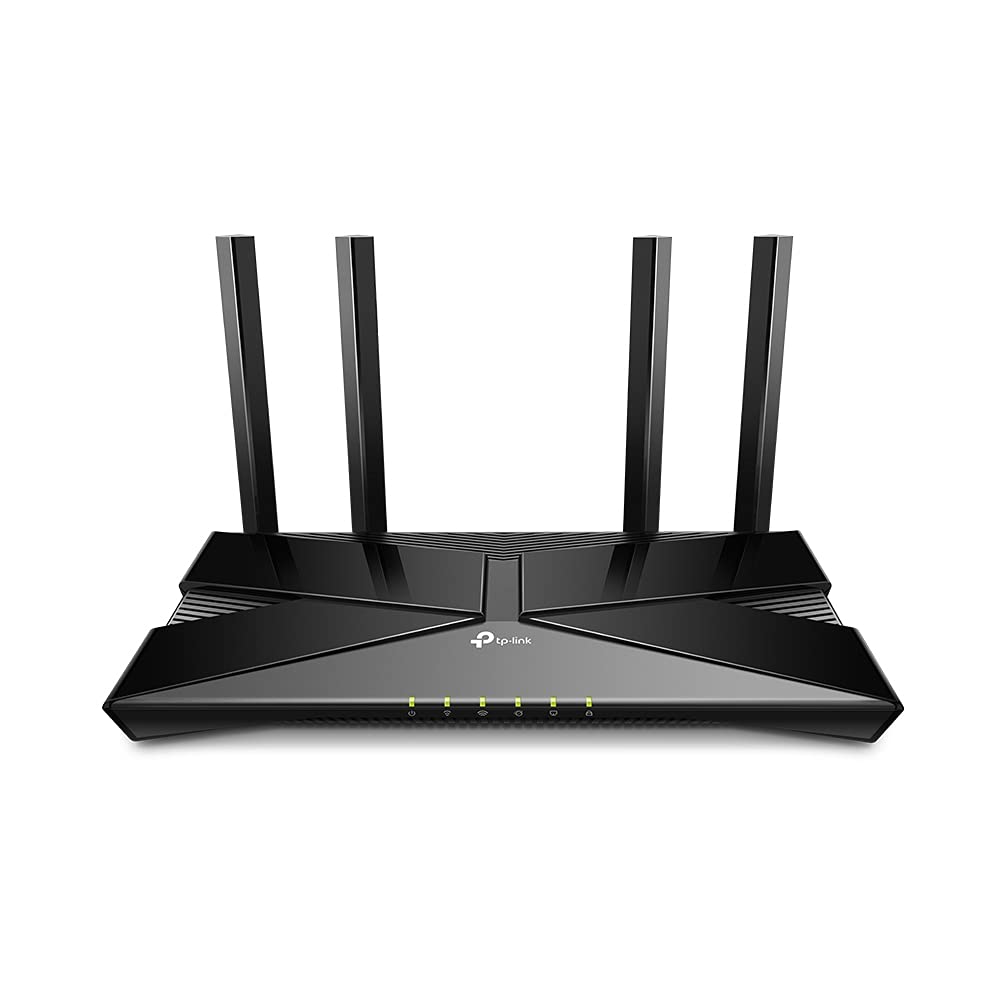
Archer AX1800 | AX1800 Dual-Band Wi-Fi 6 Router
Archer AX1800 | AX1800 Dual-Band Wi-Fi 6 Router
in 4 offers
The lowest price for [Archer AX1800] AX1800 Dual-Band Wi-Fi 6 Router, Super-fast 1.8Gbps Wi-Fi, One Mesh right now is $128.47 at BIG W, compared across 4 retailers.
The all-time low was $85.00 on 4 Mar 2026 — today's price is 51% above the lowest ever. It has been notably cheaper before — worth setting a price alert.
Prices last updated 26 Aug 2026.
[Archer AX1800] AX1800 Dual-Band Wi-Fi 6 Router, Super-fast 1.8Gbps Wi-Fi, One Mesh
Archer AX1800 | AX1800 Dual-Band Wi-Fi 6 Router
Archer AX1800 | AX1800 Dual-Band Wi-Fi 6 Router

