Last updated at 12/05/2026 19:39:56
2 x Marmite Yeast Extract Spread (250g)
Affiliate Disclosure: We may receive a small commission for purchases made through this link at no extra cost to you. This helps support our site. Thank you!
Marmite Bread Spread - 250 gms
7-day returns
2 x Marmite Yeast Extract Spread (250g)
Affiliate Disclosure: We may receive a small commission for purchases made through this link at no extra cost to you. This helps support our site. Thank you!
Marmite Bread Spread - 250 gms
7-day returns
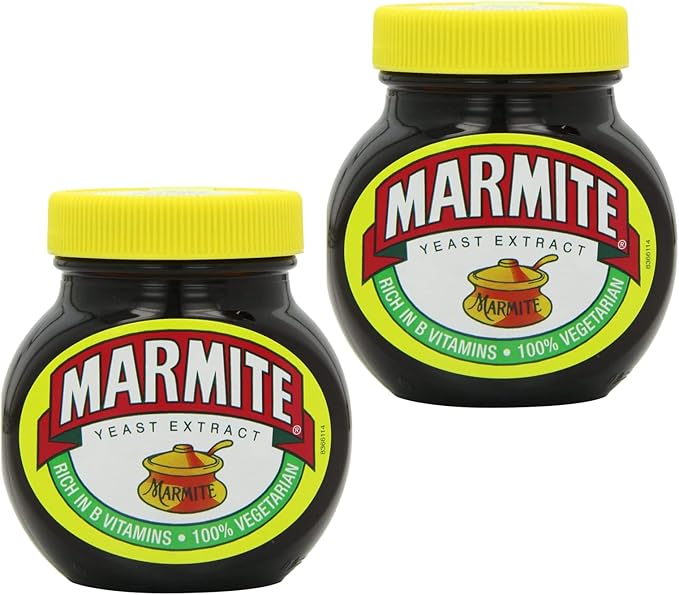
Marmite was conceived in 1902 and the Marmite Food Company opened a small factory in Burton-on-Trent where it still resides today. It took a couple of years to perfect the recipe and for the British public to warm to the spread's distinctive taste. Before Louis Pasteur realized that the cells in yeast were in fact living plants, people simply discarded this by-product of the brewing process. German scientist Liebig then went on to make yeast into a concentrated food product - one that resembled meat extract but was in fact vegetarian. Following the discovery of vitamins in 1912, yeast was found to be a great source of five important 'B' vitamins. As a result Marmite was included in soldiers' ration packs during World War I. It became a dietary supplement in prisoner-of-war camps in World War II and was sent to British peacekeeping forces in Kosovo to boost morale in 1999. Today Marmite is a nutritious, black, tasty, savory spread enjoyable on toast or bread or even as a cooking ingredient. It is made from spent brewers yeast and comes in a distinctive black jar with a yellow lid.
Marmite was conceived in 1902 and the Marmite Food Company opened a small factory in Burton-on-Trent where it still resides today. It took a couple of years to perfect the recipe and for the British public to warm to the spread's distinctive taste. Before Louis Pasteur realized that the cells in yeast were in fact living plants, people simply discarded this by-product of the brewing process. German scientist Liebig then went on to make yeast into a concentrated food product - one that resembled meat extract but was in fact vegetarian. Following the discovery of vitamins in 1912, yeast was found to be a great source of five important 'B' vitamins. As a result Marmite was included in soldiers' ration packs during World War I. It became a dietary supplement in prisoner-of-war camps in World War II and was sent to British peacekeeping forces in Kosovo to boost morale in 1999. Today Marmite is a nutritious, black, tasty, savory spread enjoyable on toast or bread or even as a cooking ingredient. It is made from spent brewers yeast and comes in a distinctive black jar with a yellow lid.
in 2 offers
The lowest price for Marmite Spread Yeast Extract, 250 G right now is $26.20 at eBay.com.au, compared across 2 retailers.
The all-time low was $26.20 on 12 May 2026. That's the lowest price we've ever tracked — a great time to buy.
Prices last updated 12 May 2026.
Marmite Spread Yeast Extract, 250 G
Marmite was conceived in 1902 and the Marmite Food Company opened a small factory in Burton-on-Trent where it still resides today. It took a couple of years to perfect the recipe and for the British public to warm to the spread's distinctive taste. Before Louis Pasteur realized that the cells in yeast were in fact living plants, people simply discarded this by-product of the brewing process. German scientist Liebig then went on to make yeast into a concentrated food product - one that resembled meat extract but was in fact vegetarian. Following the discovery of vitamins in 1912, yeast was found to be a great source of five important 'B' vitamins. As a result Marmite was included in soldiers' ration packs during World War I. It became a dietary supplement in prisoner-of-war camps in World War II and was sent to British peacekeeping forces in Kosovo to boost morale in 1999. Today Marmite is a nutritious, black, tasty, savory spread enjoyable on toast or bread or even as a cooking ingredient. It is made from spent brewers yeast and comes in a distinctive black jar with a yellow lid.
Marmite was conceived in 1902 and the Marmite Food Company opened a small factory in Burton-on-Trent where it still resides today. It took a couple of years to perfect the recipe and for the British public to warm to the spread's distinctive taste. Before Louis Pasteur realized that the cells in yeast were in fact living plants, people simply discarded this by-product of the brewing process. German scientist Liebig then went on to make yeast into a concentrated food product - one that resembled meat extract but was in fact vegetarian. Following the discovery of vitamins in 1912, yeast was found to be a great source of five important 'B' vitamins. As a result Marmite was included in soldiers' ration packs during World War I. It became a dietary supplement in prisoner-of-war camps in World War II and was sent to British peacekeeping forces in Kosovo to boost morale in 1999. Today Marmite is a nutritious, black, tasty, savory spread enjoyable on toast or bread or even as a cooking ingredient. It is made from spent brewers yeast and comes in a distinctive black jar with a yellow lid.

